The #1 Strategy for Using Birthday Promotions to Retain More Customers
A customer walks in on their birthday, redeems a free dessert, says “nice,” and disappears for eleven months.
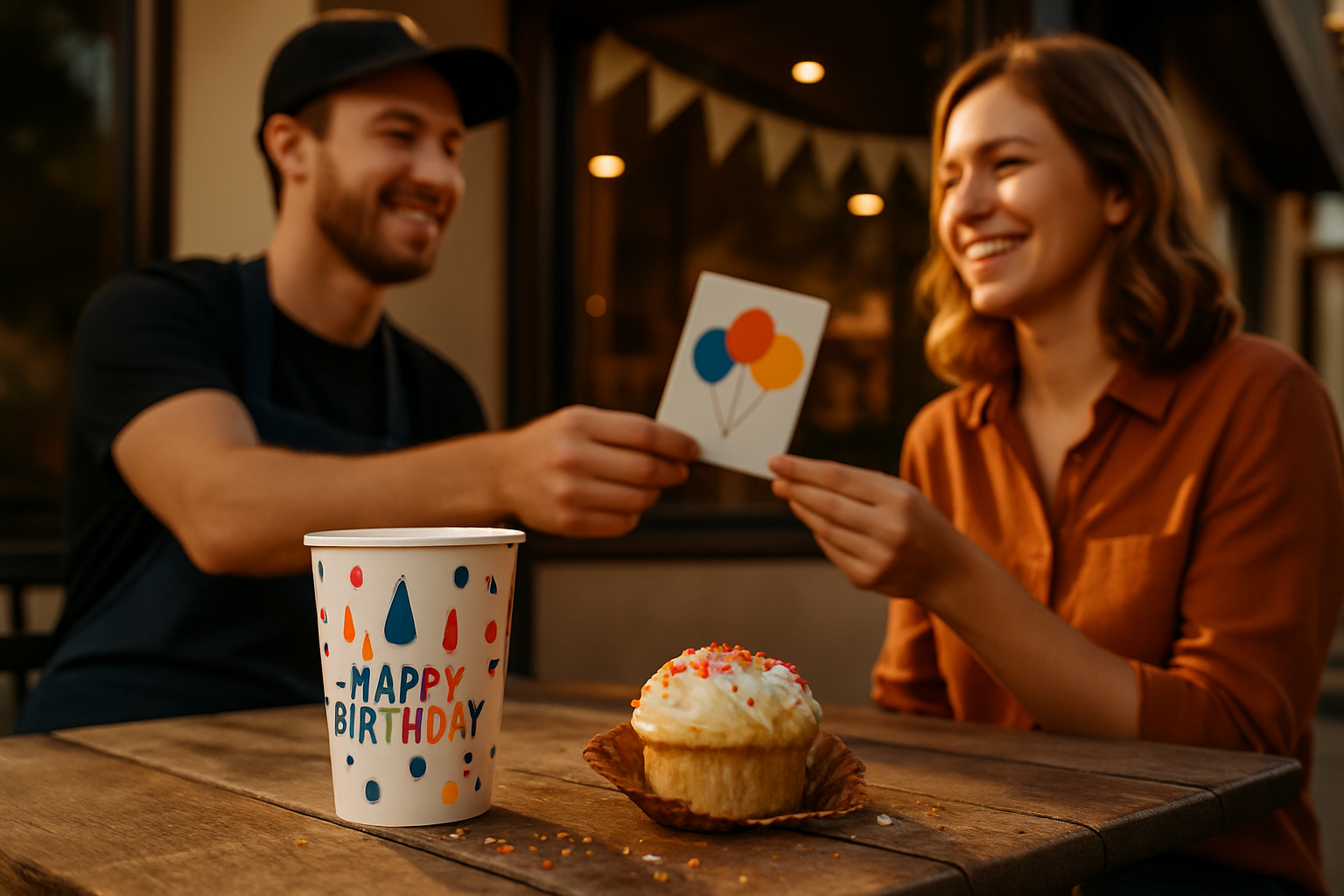
A customer walks in on their birthday, redeems a free dessert, says “nice,” and disappears for eleven months. That is not retention. That is a one-time transaction with frosting on it.
The #1 strategy is simpler, and honestly more valuable: use the birthday offer to trigger a second visit before the birthday excitement wears off. Build every birthday promotion as a two-visit campaign, not a single freebie.
The birthday reward gets attention. The return offer creates the habit. Those are two different jobs, and local businesses that separate them tend to get far more out of the same discount budget.
Okay but seriously, a free $8 appetizer is not expensive if it brings in a group of four, captures permission to contact the guest again, and gives them a reason to return within 14 days. It is expensive if you give it away with no follow-up, no usable customer data, and no next step.
Why birthdays are such a powerful retention moment
Birthdays are one of the few marketing moments customers willingly identify themselves around. People expect a little recognition. They are primed to treat themselves. They may invite friends. And they are actively looking for offers, which is why pages covering everything you can get free on your birthday get so much attention from consumers.
That behavior matters for a local business. You are not trying to convince someone that a birthday is a reason to go out. They already believe that. Your job is to make your business one of the places they remember when they are deciding where to spend the day, weekend, or birthday month.
There are a few psychological reasons this works:
- Recognition feels personal. A message that says “Happy birthday, Jamie” lands differently from a standard Tuesday promotion. The customer gave you that date, so using it well feels like a benefit of being known.
- The reward creates reciprocity. If your shop gives someone a genuinely useful perk, many customers feel more open to purchasing, bringing a friend, posting a photo, or returning later. Not everyone, obviously. But the gesture changes the tone.
- The deadline gets people moving. A birthday reward with a clear window gives a customer a reason to stop postponing a visit.
- Celebrations are social. One birthday guest can bring two, four, or ten paid customers. A modest reward can be a very efficient acquisition and retention cost when the party spends around it.
- Memory attaches to milestones. If the service is good and the offer feels easy, your business becomes part of their annual routine. That is the real prize.
Big chains understand the basic mechanism. The Starbucks birthday reward is memorable because customers know it exists, have a clear app relationship, and are trained to check the app before their birthday. Your neighborhood business does not need Starbucks-scale technology. It needs the same clarity: join, receive, redeem, return.
The two-visit birthday campaign
Here is the practical version. Give a birthday reward that makes a first visit feel special, then give a second incentive only after redemption. The second incentive should be smaller than the birthday gift but tied to a behavior you want more of.
For example, imagine a local coffee shop with an average ticket of $9.50 and a gross margin that can handle a free standard drink.
- A customer joins the loyalty list and adds their birthday.
- Seven days before their birthday, they receive: “Happy birthday. Enjoy one free handcrafted drink up to $7, valid during your birthday month with a loyalty account.”
- They redeem it on a Saturday and buy a pastry, bringing the ticket to $13.
- Within 24 hours, they receive a thank-you offer: “Come back in the next 10 days and earn double points, or get $3 off a $12 purchase.”
- They return, spend $12 to $18, and now have two recent visits instead of one annual freebie redemption.
That is the whole play. Not complicated. But it gets skipped constantly because businesses put all their creative energy into the birthday offer and none into the post-redemption message.
The first reward should feel celebratory. The second reward should feel like a reason to build a routine.
For a restaurant, the return reward could be 20 percent off a weekday entrée, valid Monday through Thursday within 21 days. For a salon, it could be a complimentary deep-conditioning add-on with a paid service booked within 30 days. For a boutique, it could be $10 off a $50 purchase in the next two weeks. For a dog groomer, it might be a free nail trim added to a future full grooming appointment.
This one's underrated: do not make the second offer another completely free item unless your margins are unusually strong. You want the customer to make a purchase, not become a professional freebie collector. A spend threshold is your friend.
Decide what the birthday offer is supposed to accomplish
Before choosing “free dessert” or “$10 off,” answer one question: what customer behavior are we trying to create?
A birthday promotion can be designed for different goals, but trying to hit every goal with one offer usually makes the terms messy.
If you need more first-time visits
Offer something easy to understand and easy to share. A free appetizer with the purchase of an entrée, a free mini facial with a booked service, or a birthday drink with any purchase can work. The key is keeping the cash register from becoming a bottleneck.
For a new local restaurant, “Free birthday dessert for the table with two adult entrées” is often stronger than “15 percent off.” The dessert feels like a celebration. Two entrées protect the economics. And a table sharing a dessert is a better social experience than a slightly smaller check.
If you need more loyalty signups
Make birthday enrollment exclusive to members, but do not hide the requirement in microscopic terms. Say it plainly: “Join our rewards program at least seven days before your birthday to unlock your birthday reward.”
The lead time matters. If customers can sign up at the counter and instantly claim a high-value reward, some will do exactly that and never engage again. A 7-day or 14-day advance enrollment rule filters out a chunk of pure opportunistic redemptions while remaining reasonable for genuine customers.
Many customers specifically search for apps that give birthday freebies, so if your business has a loyalty app, make the birthday benefit visible inside it. If you do not have an app, an email and phone-number based program can still do the job. The experience matters more than having a fancy interface.
If you need weekday traffic
Do not offer the exact same redemption conditions every day of the week. A bakery that is slammed Saturday morning and quiet Tuesday afternoon should not spend its promotional budget filling Saturday morning.
Try: “Your birthday treat is valid any day during your birthday month. Redeem Monday through Thursday and receive a bonus coffee upgrade.”
Or, for a casual restaurant: “Free birthday entrée up to $15 with a second entrée purchase, Sunday through Thursday.” Be careful with exclusions, though. If every weekend and holiday is blocked, customers will feel like you gave them a coupon engineered not to work. Pick the days you truly need help with, then explain them in one clean sentence.
What should you give away?
The best answer depends on your margin, your average ticket, and whether the offer encourages a party or simply creates a solo visit. But there are patterns.
Food and beverage businesses: a free dessert, a free drink, a free appetizer, or a dollar credit with a purchase requirement. Customers love a tangible treat. The public appetite for free birthday food offers is proof that food rewards are easy to understand and highly searchable.
Retail: a $5 to $15 birthday credit with a minimum purchase, a gift with purchase, or early access to a birthday-month sale. A $10 credit toward $50 is usually healthier than “25 percent off anything,” because it preserves pricing integrity and lifts basket size.
Beauty and wellness: a complimentary add-on with a paid service, a deluxe sample set, or bonus loyalty points. Free full services can attract bargain hunters and create scheduling chaos. A high-perceived-value add-on is often smarter. Beauty customers already recognize birthday perks as a category because of popular beauty and makeup birthday freebies.
Service businesses: a $20 credit toward a service over $100, a free upgrade, or a free consultation paired with a bookable next step. For a fitness studio, a birthday month guest pass can work well if you have a system to follow up after the visit.
Pet businesses: a birthday biscuit, small toy, photo moment, or a modest discount on a future grooming or daycare package. Pet parents absolutely respond to celebration marketing, and consumers actively seek birthday freebies for dogs and pets. Just make sure the offer is relevant to the purchase behavior you want, not merely cute.
My opinion: percentage discounts are usually overrated for birthday marketing. “20 percent off” makes customers calculate. A free cookie, $10 credit, birthday mocktail, or complimentary add-on feels immediate. People should understand the reward in about three seconds.
Use a birthday month, but give the return offer a shorter clock
A single birthday day can be too restrictive. People travel, work, get sick, or celebrate on the weekend. A birthday month is often friendlier and can improve redemption without making the offer feel less special.
But do not use a month-long window for everything.
A useful structure looks like this:
- Birthday reward: valid for the customer’s full birthday month.
- Post-redemption return offer: valid for 7 to 21 days after the birthday reward is redeemed.
- Win-back message: sent 30 to 45 days after redemption if the customer has not returned.
The short second deadline matters because it creates momentum. Someone who came in for a birthday drink on August 18 and gets a return offer that expires August 28 has a concrete reason to fit you into their routine soon. If it expires in three months, it becomes digital clutter.
For a business with lower visit frequency, such as a salon or auto-detailing shop, stretch the return window. A 30- to 60-day follow-up may be more realistic. Match the timing to how often people naturally buy from you. Real talk, you cannot force weekly behavior from a business customers only need every six months.
Promotion matters more than most businesses admit
A fantastic birthday offer that no one knows about is just a line in your POS system.
Promote it in places where people are already deciding whether to join your loyalty list:
- On a small sign at checkout: “Add your birthday, get a birthday treat.”
- In the footer of appointment confirmations and receipts.
- On your Google Business Profile posts and social bios, if that fits your marketing workflow.
- In a welcome email, right after someone joins.
- Inside your loyalty dashboard or birthday app, if you use one.
- At the end of a purchase, with staff using a simple script: “Want us to send you a birthday reward? It takes ten seconds.”
Do not make staff memorize a paragraph of legal terms. Give them one line. For example: “Our rewards members get a birthday treat, just add your birthday today.”
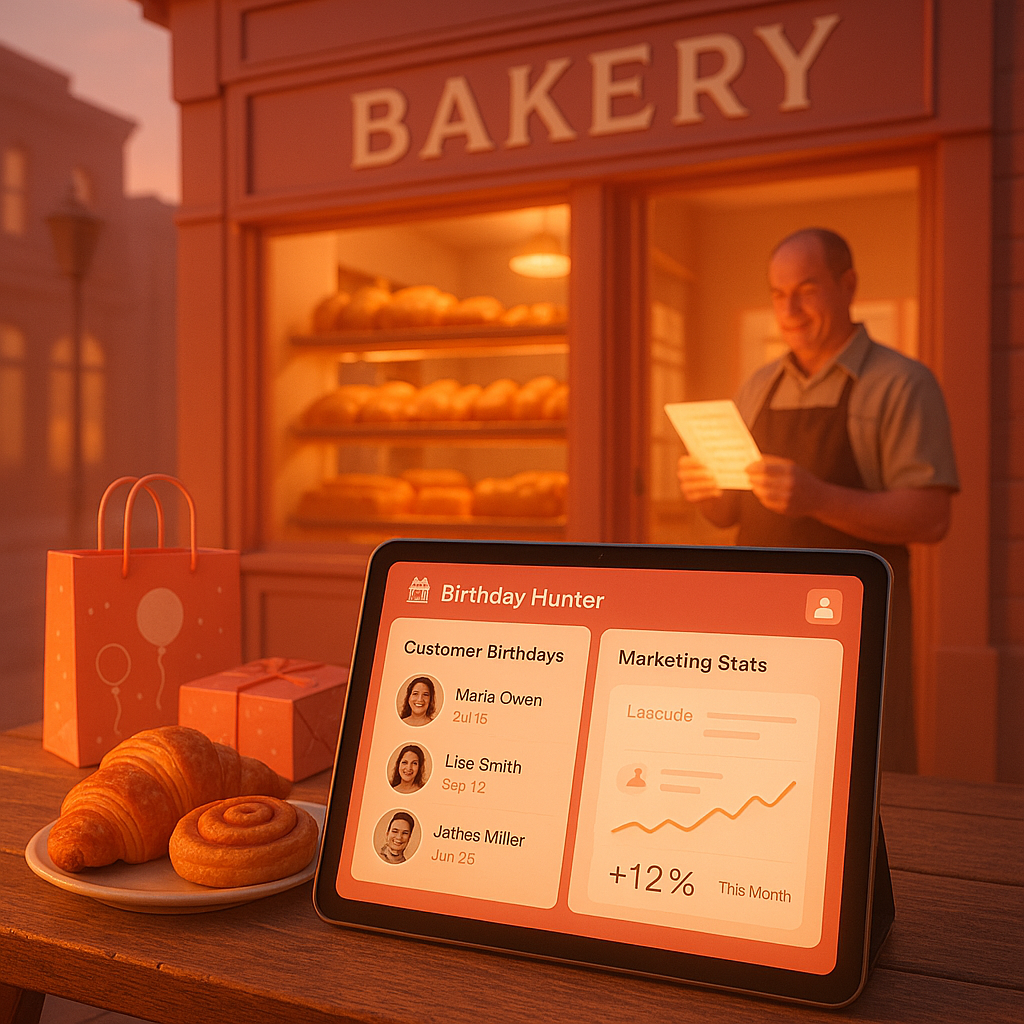
And yes, list the deal where deal seekers are looking. Birthday Hunter is a platform where local businesses list their deals and birthday offers to reach motivated customers, and it is a free way for businesses to get discovered by deal-seeking locals. That is useful especially for independent businesses that do not have a huge paid-media budget. People searching things like “birthday freebies Vancouver” are already in discovery mode. Meet them there with an accurate listing and clear terms.
Be specific in the listing. “Free birthday item” is weak. “Free birthday dessert with any entrée, valid throughout birthday month for rewards members” is clear. If customers need to sign up in advance, say how far in advance. If the reward excludes alcohol, say that too. Clear terms reduce awkward counter conversations and negative reviews.
The message sequence that actually drives repeat visits
You do not need a giant automation stack. You need four messages, written like a human.
1. The enrollment confirmation
Send immediately after signup.
“You’re in. Add your birthday by [date] to receive your birthday reward. We’ll send it when your month arrives.”
This message sets expectations and prevents the “I signed up two minutes ago, where is my free item?” issue.
2. The pre-birthday reminder
Send 7 days before the birthday month begins, or 7 days before the actual birthday if you use a shorter window.
“Your birthday treat is almost here. Open this message during your birthday month to redeem your free dessert with any entrée.”
That “happy birthday” language is fine, but timing is better than fluff. Get the reward into the customer’s mind before they make celebration plans.
3. The redemption thank-you with the return trigger
Send within 24 hours after they redeem.
“Thanks for celebrating with us. Come back by September 12 and get $5 off $25. Bring someone who missed the birthday dessert.”
This is your retention message. Do not bury it inside a generic receipt email. Make it obvious.
4. The quiet win-back
Send 30 to 45 days later only if the customer has not returned.
“We saved you a little something. Take 15 percent off your next weekday visit through September 30.”
Use a different offer from the birthday reward. If they did not respond to free dessert, another free dessert may not solve the problem. A weekday discount, bonus points, or a new-product invitation gives them a different reason.
Measure the numbers that tell you whether it is working
Redemption rate alone can fool you. A high redemption rate is nice, but it does not prove retention. Track these numbers by month and by offer type:
- Birthday enrollment rate: number of customers with birth dates on file divided by total active loyalty members.
- Birthday reward redemption rate: redemptions divided by birthday rewards issued.
- Average transaction value at redemption: compare birthday visits with typical visits.
- Second-visit rate: percentage of birthday redeemers who return within 14, 30, or 60 days.
- Return-offer redemption rate: how many people use the follow-up incentive.
- Incremental revenue: revenue from birthday redeemers and follow-up visits minus the cost of rewards and discounts.
Here is a simple scenario. A neighborhood restaurant sends 500 birthday offers in a month. One hundred customers redeem, so the redemption rate is 20 percent. Average birthday-party check is $42, producing $4,200 in sales. The free dessert costs the business $2.25 in ingredients and packaging per redemption, or $225 total.
Then 32 of those 100 redeemers come back within 21 days using a “$5 off $30” offer. Their average return check is $37. Those return visits add $1,184 in sales. The discount cost is $160. Even before you calculate margin precisely, you can see why the second-visit offer is the part worth optimizing.
If only 4 customers return, the birthday offer may still be a pleasant brand touch, but it is not yet a retention engine. Test the follow-up timing, threshold, and message before you decide birthday marketing “doesn’t work.”
Common birthday marketing mistakes, and the fixes
Giving away too much with no purchase requirement
A full free entrée, haircut, or high-cost retail item can create a rush of one-time redemptions. Some businesses can absorb that as an acquisition expense, but most independents should be cautious.
Fix: use a purchase threshold, a companion purchase, or a high-margin add-on. “Free dessert with entrée” and “$15 off $75” are both easier to sustain than an unlimited free main item.
Hiding the rules until the customer is at the counter
This is where birthday promotions go from “fun” to “annoying.” If a reward requires an account, ID, a minimum spend, or advance registration, customers should know before arriving.
Fix: put the key terms in the original message, the deal listing, and the POS-facing staff instructions. No surprises.
Making customers wait too long to receive the offer
If someone joins in January and their birthday is in November, you have ten months to go silent. That is a missed opportunity.
Fix: welcome them immediately, give them a small first-purchase incentive if appropriate, and continue sending useful, limited messages. Birthday data is not a reason to ignore the customer until their special date.
Sending only one automated “happy birthday” email
This is the biggest one. A single message may produce a redemption, but it does not build retention by itself.
Fix: attach a post-redemption return offer and measure whether it creates a second visit. The campaign is not done when the birthday coupon is scanned.
Training staff poorly
Your team should know what the offer is, where to find it, what to do if the customer forgot their phone, and how to mention the follow-up benefit. Nothing kills goodwill faster than a cashier acting suspicious about a clearly advertised reward.
Fix: do a five-minute pre-shift briefing when you launch. Give staff a one-page cheat sheet in your normal operations system. Test a redemption yourself in the POS before announcing anything publicly.
Ignoring fraud and duplicate accounts without becoming hostile
Yes, people will try to create duplicate accounts or use questionable dates. Do not turn your birthday offer into airport security.
Fix: require one account per phone number or email, set a modest reward value, require advance enrollment, and reserve the right to request ID for unusually high-value offers. Most fraud disappears when the offer is sensible.
Start with a 60-day test, not a forever program
You do not need to get every detail perfect before launching. Build a controlled test.
For the next 60 days, choose one birthday offer and one return offer. Keep the mechanics simple. For example:
- Birthday month: free dessert with any entrée for loyalty members enrolled at least 7 days before their birthday.
- Within 24 hours after redemption: $5 off $25, valid for 14 days.
- Measure second visits within 30 days.
- Compare customers who received the return offer with a small holdout group, if your system allows it.
If the return rate is weak, do not immediately increase the giveaway. Test the message first. “$5 off $25” might lose to “double points on your next visit,” depending on whether your regular customers care about points. A restaurant may find that “free appetizer with two entrées” performs better because it naturally encourages a social return. A boutique may find that a $10 credit over $50 lifts average order value more reliably.
The point is to learn your customers’ behavior, not copy a national chain’s offer word for word.
Birthday marketing works because people want to feel recognized. Retention happens when you respect that moment, make redemption painless, and give them a good reason to come back while the experience is still fresh. That second visit is where the real money is.
FAQ
What is the best birthday promotion for a local business?
The best promotion is one that feels generous while protecting your margin and creating a second visit. For many restaurants, that is a free dessert or appetizer with a qualifying purchase. For retail, a fixed-dollar credit with a minimum spend often works well. Build in a follow-up offer after redemption, because that is what turns a birthday visit into retention.
Should birthday offers be valid only on a customer’s actual birthday?
Usually, no. A birthday month is more customer-friendly and gives people time to plan. Use a shorter deadline, often 7 to 21 days, for the post-redemption return offer. That combination gives customers flexibility without losing urgency.
Do customers need to join a loyalty program to get a birthday reward?
For most businesses, yes. Requiring loyalty enrollment helps you identify the customer, deliver the offer, measure results, and follow up after redemption. A 7- to 14-day advance signup requirement is a practical way to reduce last-minute abuse while keeping the program accessible.
How much should a business spend on a birthday freebie?
Start with an item or credit whose direct cost is manageable, often around $2 to $8 for food and beverage businesses, or a fixed-dollar credit tied to a minimum purchase in retail. The right amount depends on your margins and average ticket. Track the total cost against return visits and revenue from the follow-up offer, not just the first birthday transaction.
How do I promote a birthday deal locally?
Put it in your loyalty signup flow, receipt messaging, email welcome series, social profiles, and in-store signage. Make the terms clear before people arrive. You can also list the offer on deal-discovery platforms where customers are actively searching for birthday promotions, especially if you are trying to reach new local audiences without spending heavily on ads.
Brands mentioned in this post


Celebrate Smart: Best Birthday Freebies and Deals to Find in Dubai Today
Next PostBirthday Hunter: Your Free Milwaukee Birthday Deal Tracker on iOS
Related Posts
Related Guides
15 Apps That Pay You Real Money in 2026 (Cash, Not Just Points)
Looking for apps that actually pay real money? Here's how reward apps work, what they pay, red flags to avoid, and how Birthday Hunter pays out to Cash App, PayPal, and Venmo.
Get Paid to Play Games: 10 Ways to Earn Real Money Playing in 2026
Can you really get paid to play games? Here's how game-reward apps work, what they realistically pay, what to avoid, and how Birthday Hunter turns gameplay into cash to Cash App, PayPal, or Venmo.
Free Birthday Drinks: Every Coffee, Smoothie, and Beverage You Can Get Free in 2026
A complete guide to free birthday drinks. Coffee, lattes, smoothies, soda, tea, and 21+ beverages. See which chains give them, how to sign up, and how long each offer lasts.
Free Birthday Desserts: Ice Cream, Cake, Cookies, and Donuts You Can Get Free in 2026
The complete guide to free birthday desserts. Ice cream, bakery cake, cookies, donuts, and frozen yogurt. Which chains give them, how to sign up, and how long the offers last.