Actionable Tips for Listing Your Retail Business on Deal Apps Successfully
A customer finds your taco shop on a deal app at 10:42 p.m., signs up for a free birthday taco, and then promptly forgets about it for six weeks.
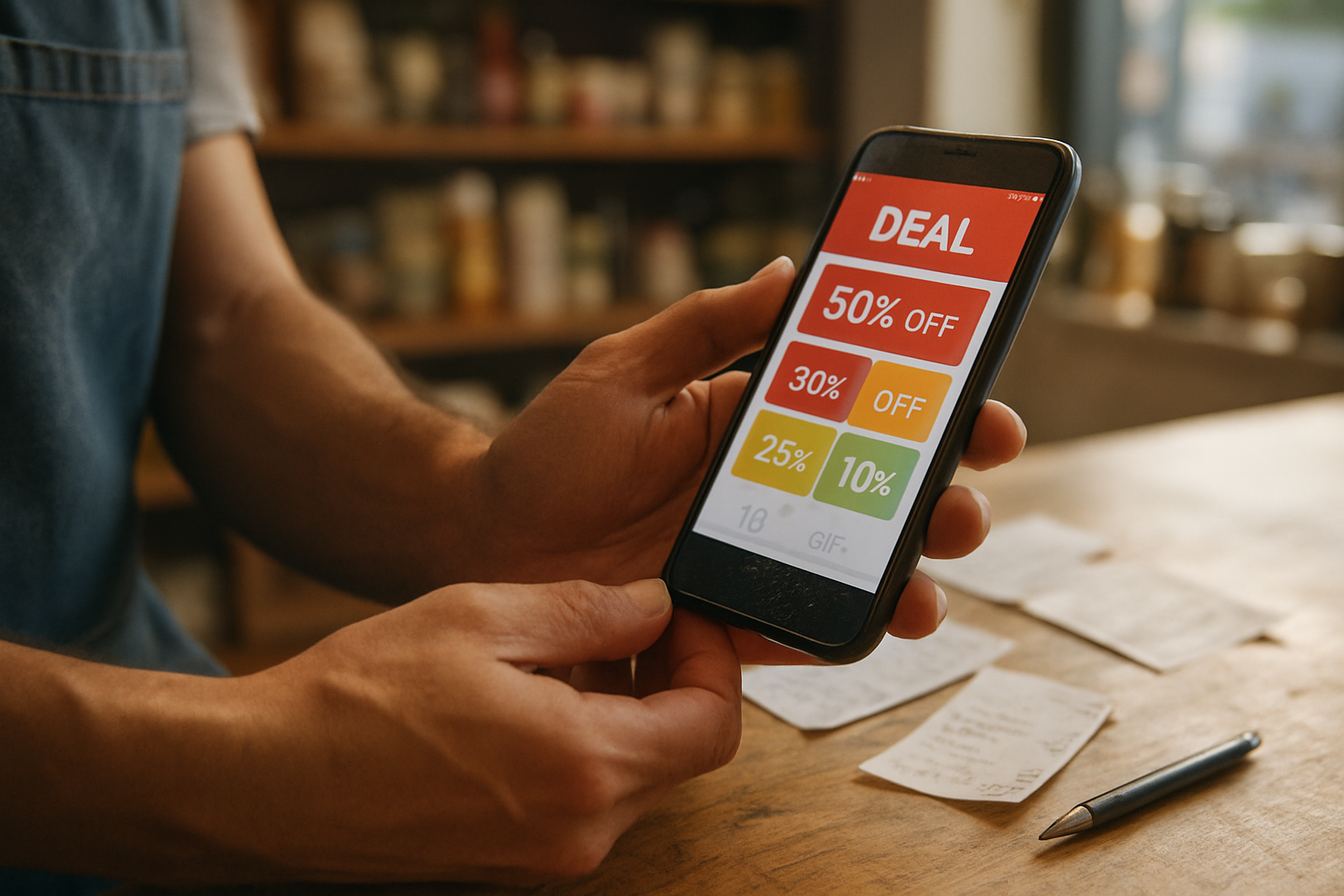
A customer finds your taco shop on a deal app at 10:42 p.m., signs up for a free birthday taco, and then promptly forgets about it for six weeks. Annoying? Maybe. But that is still a way warmer lead than the person who scrolled past your Instagram ad while half-watching TV. They gave you an email, chose a birthday, and told you, pretty clearly, “I like deals and I might come eat here.” That’s useful.
I got obsessed with birthday freebies in college because free food was, frankly, a budget strategy. The bigger lesson was that the businesses doing it well weren’t really giving away a random cookie. They were creating a reason to visit, a reason to bring someone, and a reason to come back after the birthday is over. Local businesses can do that too, without turning every Tuesday into a coupon apocalypse.
Deal apps and freebie directories work best when you treat them as discovery tools, not magic vending machines. A solid listing, a clear birthday offer, and a simple follow-up plan can turn one free item into repeat regulars. A vague listing that says “special offers available!” is basically invisible. Nobody is planning their birthday around “maybe.”
Start with an offer people can understand in three seconds
The deal app shopper is moving fast. They are comparing your listing to ten others, possibly while making a birthday itinerary that includes coffee, lunch, dessert, and some kind of beauty freebie. Your offer has to answer four things immediately:
- What do I get?
- What do I have to do first?
- When can I use it?
- Where does it work?
“Join our rewards program for a birthday surprise” is technically an offer, but it is weak copy. A shopper has no clue whether the surprise is a free entree or 10 percent off a $4 muffin. Those are not remotely the same thing.
A clearer version: “Join by the 10th of your birthday month and get a free regular drink, up to $7, valid for 14 days at our downtown location.” Not sexy writing, but incredibly useful writing. People can decide right away if it fits their plans.
For a local coffee shop, a free drip coffee or pastry is often more sustainable than a free specialty latte with extra shots, oat milk, cold foam, and a personality. For a casual restaurant, a free appetizer or dessert with an entree purchase is usually smarter than a totally free meal. For a salon, a complimentary add-on, like a conditioning treatment with a booked service, is often better than giving away your core service.
I have strong feelings about “free item with purchase” offers: they are good when the purchase requirement is reasonable and bad when it feels like a trap. “Free birthday dessert with any entree” makes sense. “Free cupcake after spending $50 before tax, excluding every menu item people actually order” makes people mad, and then they tell Reddit. Not ideal.
Build the birthday offer around your real margins
Before publishing anything, do the boring math. This is the part people skip because they are excited about customer acquisition, then panic when 90 people show up for free stuff in one weekend.
Let’s say you run a neighborhood pizza place. A personal pizza sells for $14, but the ingredients, packaging, and direct food cost are $4.20. Giving away the whole pizza to every birthday member might work if your average birthday party brings two paying friends, but it can get ugly fast if solo redemptions are common.
A more controlled structure could be:
- Free garlic knots, food cost around $1.25, with a $12 purchase
- $10 birthday credit toward a dine-in order of $25 or more
- Free dessert with any pizza purchase
- Free personal pizza for loyalty members who have made at least one prior purchase
That last option is underrated. Requiring one qualifying purchase before the birthday reward stops your program from becoming a once-a-year freebie drive-through. It also makes the reward feel earned, which people tend to value more. Starbucks Rewards is a huge-scale example of the basic idea: regular engagement and app use create a more ongoing relationship than a coupon that appears out of nowhere.
You do not need to copy a giant chain’s program, though. Please don’t spend six months trying to build an app because someone said apps are the future. A simple email and phone-based rewards system through a provider you already use can be plenty. The best program is the one your staff can explain without staring into the middle distance.
Pick a redemption window that creates urgency without being rude
One day only sounds exciting on paper. In real life, birthdays land on workdays, holidays, snow days, school pickup days, or the one day a person has the flu. A one-day offer can make a customer feel like you handed them a gift and immediately snatched it back.
Seven days before through seven days after a birthday is generous and workable. A 14-day window after the birthday is even easier operationally, especially for appointment-based businesses. The point is to give people enough flexibility that they can actually come in, while still giving them a reason not to wait until November.
If your business gets crushed on Saturdays, make the fine print useful rather than sneaky: “Valid Sunday through Thursday” is fair if it is clearly shown before signup. Hiding blackout dates in tiny text after someone has joined is how a cute promotion turns into a one-star review.
Why birthday deals work better than random discounts
Birthdays hit a few very human buttons at once. People expect to be treated a little differently. They are already looking for places to eat, shop, book, or visit. And they often bring other people with them. The free item is not always the main thing, it is the nudge that gets your business onto the shortlist.
There is also the reciprocity effect. When someone gets a real, useful reward, they feel warmer toward the business. Not everybody becomes loyal because of one free cookie, obviously. But a free cookie plus a great first experience plus a follow-up offer? That starts to add up.
Birthday marketing also benefits from planning behavior. People search stuff like free birthday food offers before the actual day, sometimes weeks ahead. That gives your listing a chance to show up when they are making choices, not after they have already gone somewhere else.
And if you think birthday rewards are just for restaurants, nope. Beauty stores, pet businesses, movie theaters, local boutiques, fitness studios, car washes, and bakeries all have room to create a small “happy birthday to you” moment. A dog bakery can offer a free mini pup treat with a purchase. A bookstore can offer $5 birthday credit. A yoga studio could offer a free guest pass during the member’s birthday month. The offer just needs to match why people visit you in the first place.
Make your deal-app listing painfully specific
A deal app listing is often someone’s first impression of your business. Assume they have never heard of you. Assume they don’t know which side of town you are on. Assume they will not hunt down your Instagram bio, your Google listing, and three old posts to figure out whether the deal is real.
Include these details in the listing itself:
- Your exact business name, neighborhood, city, and service area
- Whether the deal is in-store, online, pickup, delivery, or appointment-only
- The actual reward and its retail value when that helps clarify it
- Signup cutoff, if there is one
- Redemption window and blackout dates
- Whether a purchase is required
- Whether ID, app barcode, email, or phone number is required
- Whether the offer is one per person or one per account
- A current photo of the reward, not a blurry logo from 2017
For example, compare these two descriptions:
“Sign up for our birthday club and receive a special treat!”
“Birthday Club members receive one free slice of cheesecake, up to a $9 value, during their birthday month. Join at least 7 days before your birthday. Dine-in or takeout at our Main Street location, one per member, no purchase required.”
The second one will attract fewer people who only want to argue at the counter, which is a win. It will also attract more people who actually understand the deal and can use it.
Don’t make the description robotic, though. A tiny bit of personality helps. If your bakery does oversized cinnamon rolls, say so. If your nail studio is appointment-only, say that up front and link the booking path in your profile where the app allows it. Clarity first, charm second.
Use Birthday Hunter as a free discovery channel, not your whole marketing plan
Birthday Hunter’s master list of birthday freebies exists because people actively look for these offers, and Birthday Hunter is a platform where local businesses list their deals and birthday offers to reach motivated customers. For a local business, it is a free way to get discovered by deal-seeking locals who are already in research mode. That is the good kind of visibility.
List your birthday deal, but list an everyday deal too if you have one that makes sense. Maybe it is a weekday lunch bundle, a student discount, a first-visit service credit, or a slow-hour special. The birthday reward gets attention, while the everyday deal gives people a reason to return in a normal month.
Just don’t list an offer and abandon it. Put a recurring reminder on the first business day of each month to check the details. If your hours change, your menu changes, or the reward changes, update it. Stale deal listings are worse than no listing because customers show up expecting something your team no longer honors.
Promote the deal in places customers already look
Putting an offer on a deal app is step one. You still want your existing customers to know about it, because they are the easiest people to turn into loyalty members. They already like you enough to be standing there, holding your coffee, haircut receipt, burrito, whatever.
Use a small, direct message at the point of sale: “Want a free birthday treat? Join with your phone number, it takes 20 seconds.” A QR code near the register can help, but only if it leads directly to the signup page. Sending someone to your homepage and expecting them to find the program is wildly optimistic.
Here’s a realistic little campaign for a local ice cream shop:
- Post one Reel or short video showing the birthday sundae on the first Monday of each month
- Add a birthday-club QR code to receipts and table tents
- Train cashiers to mention it after a positive interaction, not while a line is 14 people deep
- Send one reminder email 10 days before the member’s birthday month begins
- Send the reward email or text on the first day of the birthday month
- Send one “last few days” reminder three days before expiration
That final reminder can rescue a surprising number of redemptions. People intend to use things and then life happens. You are not being annoying if you send one useful reminder for a reward they requested. Five reminders is annoying. One or two is normal.
Make sure your social posts and profiles match the offer wording. If Instagram says “free birthday sundae” but the checkout system says “free scoop with $10 purchase,” your staff are going to eat the consequences, emotionally if not literally.
Train staff before you announce anything
This sounds basic because it is basic, and still, it is where a lot of otherwise good promotions die. A customer walks in excited, shows a birthday email, and the cashier says, “I don’t know what that is.” That one moment can cancel out every dollar you spent acquiring the customer.
Create a one-page internal cheat sheet. Keep it near the register and in your team chat. It should say:
- What the birthday reward is
- How to verify it
- What to do if the customer cannot find the email or barcode
- Which products are excluded, if any
- How to ring it in so you can track redemptions
- Who on shift can make an exception
Give employees a simple script: “Yep, we do that. Let me scan the code, then you can pick any regular pastry except the specialty cakes.” Nobody needs a dramatic speech. They need confidence and a clear answer.
If your POS lets you create a dedicated “Birthday Reward” discount button, do it. You want to know how many were redeemed, what else was purchased, and which location handled them. Otherwise you are guessing, and marketing guesses tend to become weird myths like “the birthday club is costing us a fortune.” Maybe it is. Maybe it is bringing in $28 average tickets alongside a $3 cookie. Those are very different situations.
Track the numbers that tell you whether it is actually working
Vanity metrics are cute, but they do not pay rent. A program with 5,000 signups and almost no visits is not necessarily better than one with 800 signups and a high redemption rate.
Watch these numbers monthly:
- New signups: How many people joined, and where did they come from?
- Redemption rate: If 100 birthday offers are issued and 18 are redeemed, your rate is 18 percent.
- Average check during redemption: Compare birthday transactions with normal transactions.
- Attachment rate: Did a free dessert lead to drinks, entrees, retail items, or add-ons?
- Second visit rate: How many birthday redeemers return within 30, 60, or 90 days?
- Cost per acquired customer: Include the cost of the reward and any paid promotion, then compare it with what that customer spends later.
Here’s a simple scenario. A salon sends 120 birthday offers for a free $12 deep-conditioning add-on with any haircut. Thirty people redeem, so the redemption rate is 25 percent. If 24 of those people also book a $65 haircut, that is $1,560 in service revenue attached to an offer with a relatively low product cost. Even if some would have booked anyway, the campaign may still be worthwhile because it gives the staff a natural moment to recommend retail products or schedule the next appointment.
Do not expect every birthday deal to make money on the first ticket. Sometimes the first visit is an acquisition cost. The real question is whether it produces a second and third visit. That is why loyalty programs matter so much.
Turn the birthday visit into a loyalty habit
A birthday reward is a door opener. Your loyalty program is what keeps the door from swinging shut behind them.
People like visible progress. “Earn 1 point per dollar and get $5 off at 100 points” is easy enough to understand. “Collect five visits and get your sixth smoothie free” is even easier. If your average smoothie is $8 and your food cost is roughly $2.50, that kind of reward can be a reasonable trade for five prior purchases, especially if customers often add a snack or upgrade.
What feels good to customers is not just the value. It is the sense that they are getting closer to something. That is why stamp cards still work. A little progress meter scratches the same brain itch as finishing a checklist.
After a birthday redemption, send a follow-up that is connected to what happened. If they redeemed a free pastry, invite them back within 21 days for double points on breakfast. If they used a birthday service add-on, offer a $10 credit toward their next booked appointment within 45 days. Keep it relevant.
Random “we miss you” discounts can work, but they are often lazy. A customer who likes your ramen does not need an email about 20 percent off merchandise they have never bought. Use the data you have, even if it is simple.
Common birthday marketing mistakes, and the fixes
The reward is too complicated
If it needs a paragraph of exclusions, a separate coupon code, a purchase minimum, a specific weekday, a minimum account age, and a lunar eclipse, rethink it. A few terms are normal. A puzzle is not.
Fix: Choose one main rule. “Free item with any purchase” or “$10 credit on $25” is enough structure for most small businesses.
You ask for a birthday but never say why
Customers are more cautious with personal data than they used to be. Asking for month and day without explaining the benefit can feel weird.
Fix: Put the promise right beside the field: “Add your birthday to receive your birthday reward.” If you only need the month for your campaign, consider collecting month rather than full date. Less friction, less data to protect.
The signup deadline is hidden
Some brands require customers to join well before the birthday. That is not automatically bad, since it prevents same-day freebie-only signups, but the requirement has to be obvious.
Fix: Put “Join at least 7 days before your birthday” in the deal title or first sentence, not buried at the bottom.
The deal is generous but impossible to redeem
A free reward is not useful if the only available appointment is three weeks out or if the location hours make it inaccessible. This is especially common with salons, fitness studios, and specialty services.
Fix: Offer a longer birthday-month window or let members book the reward as an add-on to a future paid visit.
You treat deal seekers like bad customers
This one bugs me. Yes, some people will redeem a free item and never return. That happens. But deal-hungry customers are also customers who talk, share lists, bring friends, and remember businesses that made them feel welcome. The person searching for apps that give birthday freebies may be price-conscious, but they are not automatically low value.
Fix: Design the offer so it works economically, then deliver it kindly. Do not punish people for using the promotion you created.
Localize your listing instead of copying chain language
Search behavior is more local than business owners think. People look up things like “birthday deals Berlin” or “birthday rewards Sydney,” then add neighborhoods, malls, menu items, and “near me.” If you serve a particular area, say so naturally in your profile: “Birthday latte offer at our Capitol Hill cafe,” or “Free birthday dog treat at our Northside pet bakery.”
This is not about cramming keywords into every sentence until it reads like a robot wrote it during a power outage. It is about answering the obvious location question before someone asks.
Use photos that prove the experience too. A cupcake in a branded box, the actual birthday cocktail, the dog treat, the manicure add-on, the bookstore tote. Real, current images beat generic stock photos every time. If you have multiple locations and the offer is only valid at one, say that in bold-ish plain language, not in a footnote nobody reads.
For restaurants, it can help to look at how people search for familiar offers. Someone may know about an IHOP birthday perk and assume every restaurant has a similar setup. If yours is different, that is fine. Be clear about it. “No app required, just join our email club” can actually be a selling point for people tired of downloading another app.
Do a small test before giving away the farm
You do not have to launch a huge birthday program across every channel on day one. Start with 60 to 90 days and set a cap you can live with.
For example, a boutique could test a $10 birthday credit on a $30 purchase, valid during the birthday month. Cap it at 150 redemptions for the test period if you are nervous. Track average basket size, repeat purchases, and whether customers are joining at checkout or through the deal listing.
A bakery could test two versions:
- Version A: free cookie, no purchase required
- Version B: free cupcake with any beverage purchase
Run each offer for a defined period, not on the same customer at random if your system cannot handle it. Compare redemptions, average spend, and return visits. The no-purchase cookie might bring more foot traffic, while the cupcake-with-coffee offer might produce better revenue. Neither is “right” without the numbers.
And please, don’t overcorrect after one busy weekend. Birthday traffic naturally bunches around certain dates and seasons. Give the test enough time to collect a useful sample.
FAQ
Should a small business offer a completely free birthday item?
It can, especially if the item has a low direct cost and brings people into the store. A free cookie, basic drink, small retail sample, or pet treat can be a good no-purchase reward. If your core product is expensive or labor-heavy, use a purchase threshold or offer a free add-on instead.
How far in advance should customers join a birthday program?
Seven days is a practical minimum for many businesses. It gives your system time to process the signup and stops someone from joining at the register solely for an instant freebie. If you use a monthly email cycle, 14 to 30 days may be easier, just make that rule impossible to miss.
What is a good redemption period for a birthday deal?
A 14-day window is a strong starting point. Birthday month offers can work especially well for retail, beauty, and appointment-based businesses. One-day-only rewards are usually too restrictive unless your business is built around same-day visits and the reward is very easy to use.
How do I know if my birthday promotion is profitable?
Track issued offers, redemptions, average transaction value, the cost of the free item, and repeat visits within 30 to 90 days. Profit is not just whether the first birthday ticket covers the reward. Look at whether the customer buys extra items, brings someone else, joins your loyalty program, and returns later.
Can birthday deals attract customers who only want free stuff?
Sure, some will. That is why the offer structure matters. A reasonable purchase requirement, a low-cost reward, clear limits, and a follow-up loyalty incentive protect your margins without making the deal feel stingy. Make the experience good enough that the people worth keeping have a reason to come back.
Brands mentioned in this post


Easily Find Birthday Freebies in NYC: A Guide with Birthday Hunter
Next PostTop 10 Apps to Discover Free Stuff and Maximize Savings
Related Posts
Related Guides
15 Apps That Pay You Real Money in 2026 (Cash, Not Just Points)
Looking for apps that actually pay real money? Here's how reward apps work, what they pay, red flags to avoid, and how Birthday Hunter pays out to Cash App, PayPal, and Venmo.
Get Paid to Play Games: 10 Ways to Earn Real Money Playing in 2026
Can you really get paid to play games? Here's how game-reward apps work, what they realistically pay, what to avoid, and how Birthday Hunter turns gameplay into cash to Cash App, PayPal, or Venmo.
50 Best Birthday Freebies and Deals to Claim This Year
Explore our curated list of the 50 best birthday freebies and deals available this year. From free meals and desserts to retail gifts and entertainment, maximize your birthday celebrations with these valuable offers.
30 Apps That Reward You On Your Birthday in 2026
Discover the 30 best apps that give you free food, drinks, beauty products, and exclusive perks on your birthday. Our complete 2026 guide covers signup requirements, what you get, and how to claim every reward.