Proven Birthday Marketing Strategies to Boost Local Retail Sales
A birthday offer can turn a customer who has not visited in six months into someone standing at your counter on a Tuesday afternoon, usually with a friend or...

A birthday offer can turn a customer who has not visited in six months into someone standing at your counter on a Tuesday afternoon, usually with a friend or two. That is the part local businesses sometimes miss. The free item is not really the product. It is the reason to make a plan, leave the house, and choose your shop over the five other options nearby.
I have spent enough time tracking birthday deals for my family to see the pattern. The offers people remember are simple, easy to redeem, and actually feel like a little treat. The offers people ignore are buried in an email, loaded with fine print, or so small that they do not justify a trip.
For a local retailer, restaurant, salon, bakery, pet shop, or service business, birthday marketing can do more than create one discounted transaction. Done right, it builds a usable customer list, creates repeat visits, increases average order value, and gives customers a reason to tell friends, “This place does something nice for birthdays.”
Why birthday deals work better than ordinary discounts
Look, a 15 percent off coupon is fine. Most customers have seen hundreds of them. A birthday reward lands differently because it is tied to identity. The customer is not thinking, “A business is trying to clear inventory.” They are thinking, “They remembered my birthday.”
That feeling matters, even when the customer knows the message was automated.
Birthday promotions work because they tap into a few basic behaviors:
- Reciprocity: When a business gives a customer a small gift, customers often feel more open to buying something extra or returning later.
- A personal reason to act: A birthday creates a natural deadline. “I should use this before it expires” is much stronger than “Maybe I will use this someday.”
- Celebration spending: Customers already tend to spend more around birthdays. They may bring family, buy a higher-priced item, add a dessert, book a service, or shop for themselves.
- Habit formation: If the first visit is easy and pleasant, a birthday reward can become the first step in a repeat routine.
- Social sharing: People post birthday meals, gifts, cakes, manicures, and shopping finds. A well-presented offer can earn local word of mouth without begging for it.
National loyalty programs have trained customers to expect this. Sephora’s Beauty Insider birthday gift and the well-known Ulta birthday gift and other beauty birthday freebies are good examples of how a birthday perk keeps a brand on a customer’s mind. A neighborhood business does not need the same budget. It needs the same basic idea: make the reward clear, worthwhile, and tied to a next step.
My opinion is that the best local birthday offers are rarely the biggest discounts. They are the offers with the least friction. A free coffee with any purchase, a free $10 retail credit during the birthday month, or a complimentary add-on to a booked service often beats a complicated “40 percent off one eligible item, excluding everything people want” deal.
Start with the number that matters: customer lifetime value
Before you decide what to give away, do a little math. This is where a lot of small businesses get nervous and either make the offer too stingy or too generous.
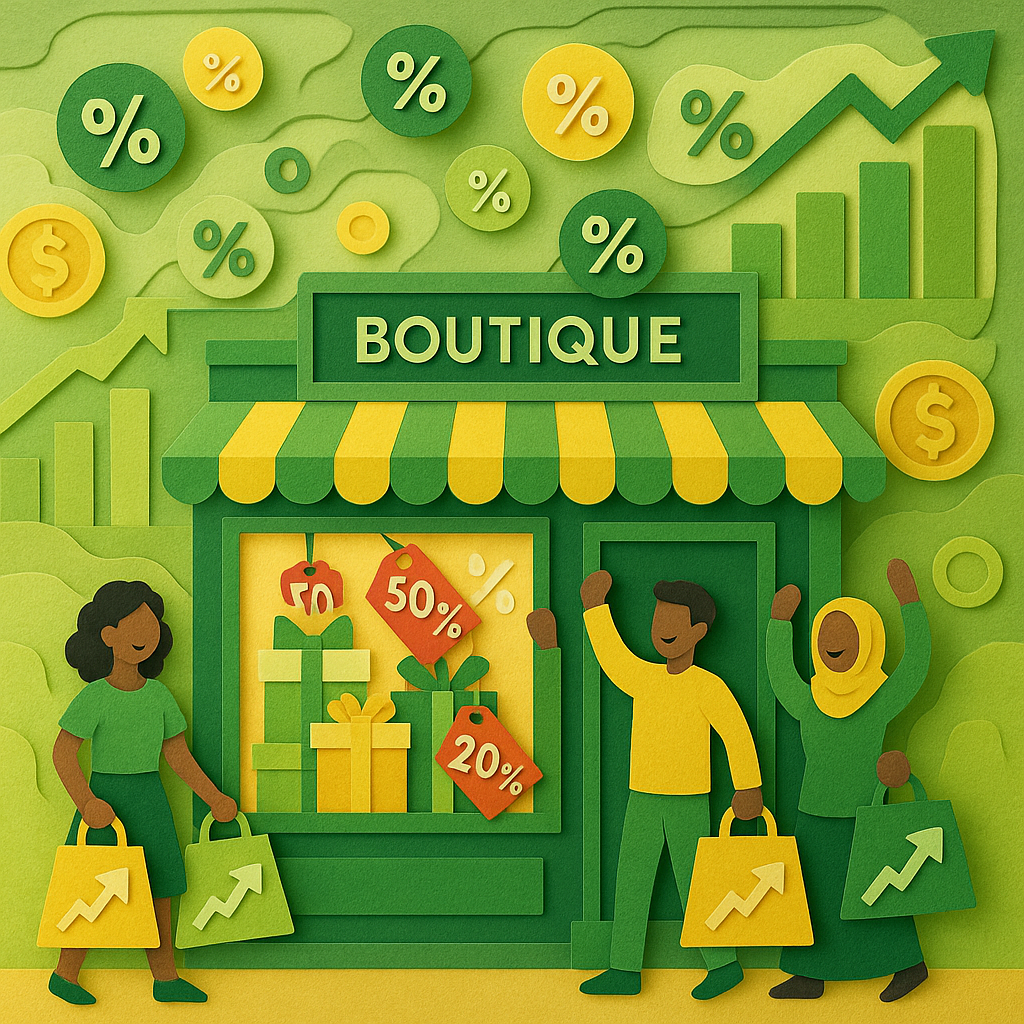
Say you own a local boutique. Your average transaction is $48, and your gross margin after product cost is 52 percent. That means you keep about $24.96 in gross profit before rent, payroll, and other operating costs.
You could offer a $10 birthday credit with a $35 minimum purchase. If the customer spends the minimum, you collect $35 in revenue and give up $10. The customer still pays $25. If your average gross margin is roughly 52 percent, you need to watch the numbers carefully, but you are also likely getting a larger basket than you would from a straight free-item promotion. Better yet, many customers will spend above the threshold because they are already in the store.
Now compare that with a birthday coupon for 10 percent off, no minimum. On a $20 purchase, the customer saves $2. That probably does not change behavior. It feels like a regular coupon, not a birthday moment.
For most local businesses, a useful starting point is one of these:
- A $10 credit with a $30 to $50 minimum, depending on your margins and typical sale.
- A free add-on worth $5 to $15, where your actual product cost is much lower than the menu or shelf price.
- A birthday-month bonus reward, such as double points or a one-time points deposit.
- A complimentary experience upgrade, such as a bakery decoration upgrade, salon conditioning treatment, gift wrapping, product sample bundle, or early access appointment.
- A free item with a purchase, especially for food and beverage businesses where the add-on purchase protects your margin.
The point is not to get people in the door at any cost. The point is to acquire or reactivate a customer in a way that can pay off over the next 12 months.
If a customer who redeems a birthday offer comes back three times per year and spends $40 each visit, that is $120 in annual revenue. Even a modest offer can make sense if it increases the odds of that repeat behavior. Track it instead of guessing.
Build the offer around your actual business model
For restaurants, cafes, and bakeries
Food businesses have an advantage. Birthday customers often arrive with other people. A free dessert, birthday drink, appetizer, or pastry can bring in a table that spends $40, $75, or more.
A strong setup might be: “Enjoy a free dessert during your birthday month with the purchase of an entrée.” For a coffee shop, try: “Free birthday drink up to $6 with any food purchase.” For a bakery: “Free birthday cupcake with any order, plus 10 percent off a cake pre-order placed during your birthday month.”
The pre-order piece matters. It turns a small freebie into a potentially larger future sale. Make it easy for staff to explain at the register.
Customers actively search for free birthday food offers, so food businesses should make their terms easy to find online. Include your neighborhood, participating location details, required signup, and expiration window. A customer should not have to call three times to learn whether the deal works at your location.
For boutiques, gift shops, and specialty retail
Retailers should avoid giving away a random low-demand item just because it is cheap. Customers can spot a clearance bin “gift” from a mile away. Instead, offer something that fits your brand and gives them a reason to browse.
A local stationery store could offer a free $8 greeting card with a $30 birthday-month purchase. A plant shop might offer a free mini succulent with a $40 purchase. A yarn shop could offer 20 percent off one full-price skein, plus a free pattern card. A bookstore could give a $10 birthday credit with a $50 minimum and ask the customer to use it in-store, not online.
That last detail is useful if your real goal is local foot traffic. You can still give customers a digital code, but make the redemption happen at the store.
For salons, spas, fitness studios, and service businesses
Service businesses usually have more room to create perceived value without giving away too much cash. An add-on often feels generous but costs less than a full discount.
Examples:
- A salon offers a complimentary deep-conditioning treatment with a color service booked during the birthday month.
- A massage studio offers an aromatherapy upgrade with a paid 60-minute session.
- A yoga studio gives a birthday guest pass so the member can bring a friend to one class.
- A car wash gives a free premium upgrade, not a free full wash.
- A pet grooming business offers a free nail trim or bandana with a paid grooming appointment.
That guest-pass idea is especially good. It brings in a second potential customer while still treating the birthday member.
Give customers enough time, but not forever
The most practical redemption window is usually the customer’s birthday month. A one-day-only reward sounds festive, but it creates unnecessary frustration. Birthdays fall on holidays, weekends get busy, and people travel. If the reward expires the same day, your customer may like the thought but never use it.
A 30-day or birthday-month window gives customers flexibility while still creating urgency. If you need tighter control because your business gets crowded, use a 14-day window that starts seven days before the birthday and ends seven days after. Just say it plainly.
Here is a clean structure:
- Customer joins your program at least 30 days before their birthday.
- The offer arrives seven days before the birthday.
- The reward can be redeemed through the end of the birthday month.
- The offer is valid once, at participating locations.
- The terms explain whether a purchase is required and whether the deal can combine with other offers.
The 30-day enrollment rule helps prevent people from joining at the register solely to claim a reward. But do not make it six months. That is overkill for most local businesses and it kills goodwill.
Use loyalty data without making it creepy
Birthday marketing works best inside a simple loyalty program. You need a customer’s first name, birthday month and day, email or mobile number, and a record of visits or purchases. That is enough to start.
Do not demand a full birth year unless you have a real operational reason. Most local businesses do not. Customers are more likely to sign up when the form feels reasonable.
Your signup screen or paper card should answer four questions:
- What will I get for joining?
- When will my birthday reward arrive?
- How do I redeem it?
- How often will you contact me?
For example: “Join Harbor Rewards. Get a free birthday pastry with any beverage purchase, earn one point per dollar, and receive occasional local-only offers. Your birthday reward arrives by email during your birthday month.”
That is much better than “Sign up for updates.” Nobody knows what that means, and people have enough inbox clutter already.
Text message programs can work well for urgent offers, but get clear consent and keep frequency low. A birthday text should feel helpful, not invasive. Something like: “Happy birthday month, Jamie. Your $10 shop credit is ready through August 31. Show this message in-store. $35 minimum purchase.” Simple.
Promote the birthday offer before the birthday
A birthday program does not grow because you added a link to the bottom of your website. You need to ask people to join at the moments when they already like your business.
Put the offer in front of customers in at least five places:
- At checkout, with a short staff script.
- On receipts, whether printed or emailed.
- In your website footer and loyalty signup page.
- On a small counter sign or table tent.
- In your welcome email after someone joins.
- In social posts around the start of each month.
- In Google Business Profile updates, where appropriate.
Train staff to use one sentence, not a long pitch. “Are you in our rewards program? We send a birthday treat and it takes about 20 seconds to join.” That is enough.
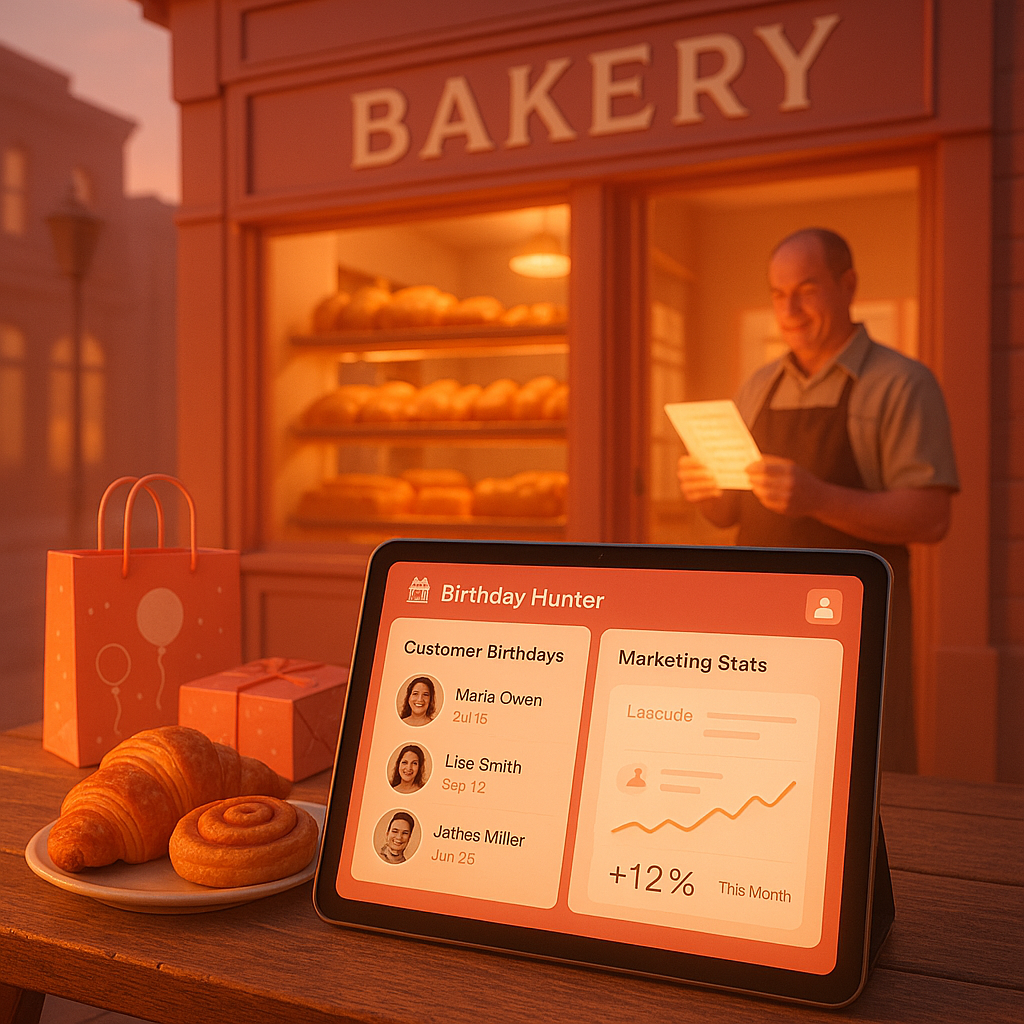
People who chase deals are already looking for them. Birthday Hunter is a platform where local businesses list their deals and birthday offers to reach motivated customers, and it is a free way for businesses to get discovered by deal-seeking locals. If you list an offer there, keep the details current. A stale offer is worse than no listing because it creates a bad first impression before the customer even walks in.
There is also a useful research angle here. Browsing a master list of birthday freebies shows what customers have been trained to expect: a clear reward, a clear signup path, and a clear deadline. You do not need to copy national chains. You do need to be easier to understand than they are.
Make the redemption feel smooth at the counter
Here is where good promotions fall apart. The customer arrives excited. The employee has not heard of the offer. The point-of-sale system has no code. A manager gets called over. Everyone feels awkward.
Do not let that happen.
Before launch, run a pretend redemption with every shift. Use the exact email, text, barcode, loyalty number, or customer name staff will see. Confirm that the discount rings correctly. Confirm whether tax applies. Confirm whether it can be stacked with other offers.
A local business does not need fancy software to start. A unique monthly promo code and a simple spreadsheet can work for a small operation. But you do need consistency. If staff have to make up the rules customer by customer, the program will cost more and frustrate people.
Give your team a short internal guide:
- Who qualifies.
- What the customer receives.
- Whether a purchase minimum applies.
- How to enter the offer in the register.
- What to do if the customer cannot find the email.
- When to call a manager.
I would rather see a business honor a reasonable birthday reward once than argue over a technicality in front of a customer. Then fix the process afterward. A $6 dessert is not worth losing a customer who might have spent hundreds of dollars over time.
Measure more than redemptions
Redemption rate is useful, but it is not the whole story. A low redemption rate does not automatically mean the offer failed. The people who did redeem may have spent more, referred friends, or returned later.
Track these numbers monthly:
- Enrollment rate: How many customers join per 100 transactions?
- Birthday reward delivery rate: Are emails bouncing or texts failing?
- Redemption rate: What percentage of issued offers gets used?
- Average order value: Compare birthday redemptions with normal transactions.
- Incremental revenue: How much did birthday customers spend after the reward?
- Repeat visit rate: Did they return within 30, 60, or 90 days?
- Referral behavior: Did birthday parties, guest passes, or shared purchases bring in new names?
Here is a simple example. You issue 400 birthday offers in a month. Eighty customers redeem, a 20 percent redemption rate. Their average ticket is $46, while your ordinary average ticket is $34. Those 80 visits generate $3,680 in revenue. If your birthday reward cost averages $4 per redemption, the direct reward cost is $320.
That does not automatically mean the promotion is profitable, because you still need to account for labor and margin. But it gives you a real starting point. Then look at whether those 80 customers make another purchase in the next 60 days. That is where the program earns its keep.
Common birthday marketing mistakes, and what to do instead
The offer is too weak to change behavior
A free sticker, 5 percent off, or a generic “special surprise” may technically be a birthday deal, but it probably will not bring someone in. If your business cannot afford a larger discount, offer a higher-perceived-value add-on. Packaging, personalization, samples, early access, and upgrades can do a lot of work.
The rules are hidden or confusing
Do not make customers hunt through three pages of terms to learn that the offer excludes weekends, requires a $75 purchase, cannot be used on sale items, and expires in 48 hours. Put the big conditions in the actual message.
Clear terms reduce staff problems too. If a customer has to ask, “Can I use this on my birthday?” your promotion copy has already failed a little.
You only email the reward once
People miss emails. Send one message seven days before the birthday, one on the birthday or first day of the birthday month, and one reminder three to five days before expiration. Do not send six reminders. That starts to feel desperate.
You make customers sign up too late
If someone joins on their birthday and your system says they must wait until next year, you have created disappointment at the exact wrong moment. A 30-day advance enrollment rule is fair. If you use it, show it during signup. You can also offer a small welcome perk to new members so they do not leave empty-handed.
You forget that customers compare offers
Customers have access to lists of places that give free stuff on your birthday, apps, coupons, and local social recommendations. They are comparing ease as much as dollar value. If your offer requires printing a form, calling ahead, and spending $60, it will lose to a slightly smaller deal that works in an app or with a phone number.
You stop after the birthday visit
The birthday redemption should begin the next marketing sequence, not end it. Send a thank-you within a few days. Then send a relevant follow-up offer 30 to 45 days later.
For example, a boutique might send: “Thanks for celebrating with us. Here is 15 percent off one full-price item through the end of next month.” A cafe might send: “Bring a friend this month and get a free pastry with two drinks.” Keep the next offer connected to what they already bought.
A practical 30-day launch plan
If you do not have a birthday program today, do not overbuild it. Start with one good offer and make it operationally solid.
- Week 1: Review your average ticket, gross margin, busiest days, and capacity. Choose one offer with a clear purchase minimum or a low-cost, high-value add-on.
- Week 2: Set up your signup form, customer fields, delivery timing, expiration dates, and register process. Write the offer terms in plain language.
- Week 3: Train staff, test redemptions, make counter signage, update your website, and prepare a welcome email.
- Week 4: Launch at checkout, on social, through email, and through your local deal listings. Review results every month and adjust one variable at a time.
Do not change the offer, the redemption window, and the purchase minimum all at once. You will not know what caused the result. Test one thing. Maybe your first version is a $10 credit with a $40 minimum. After two or three months, compare it with a free add-on worth about $10 with a $30 purchase. See which one produces better tickets and repeat visits.
Birthday rewards are not magic. Some people will sign up, redeem once, and disappear. That is normal. But a clear, useful birthday offer gives a local business a low-pressure way to stay in touch, create a reason to visit, and make customers feel recognized. For a small business competing against chains with huge ad budgets, that is a pretty practical advantage.
FAQ
What is a good birthday promotion for a local business?
A good birthday promotion is easy to understand and valuable enough to motivate a visit. For many businesses, that means a $10 credit with a purchase minimum, a free dessert or drink with a paid item, or a complimentary service upgrade. Match the offer to your margin and average transaction size.
Should birthday rewards require a purchase?
Usually, yes. A purchase requirement protects your margin and often raises average order value. Keep it reasonable. A free dessert with an entrée or a $10 credit with a $35 minimum is easier for customers to accept than a reward tied to an unrealistic spending threshold.
How far in advance should customers join to receive a birthday offer?
Thirty days is a practical rule for most local businesses. It limits last-minute abuse while still giving customers a fair chance to join. Be transparent about the cutoff at signup, and consider giving new members a small welcome offer right away.
How long should a birthday reward last?
A birthday-month redemption window is usually best. It gives customers time to use the offer and reduces complaints from people whose birthdays fall on busy, inconvenient, or travel-heavy days. If your capacity is tight, a 14-day window around the birthday can also work.
How do I know if my birthday marketing program is profitable?
Track redemption rate, average order value, reward cost, gross margin, and return visits within 30 to 90 days. Do not judge the program only by how many free birthday gifts you gave out. The real question is whether those customers spend more, return more often, or bring in new customers over time.
Brands mentioned in this post

Score Amazing Birthday Deals in Anaheim with Birthday Hunter’s Convenient App
Next PostNever Miss a New Orleans Birthday Deal Thanks to Birthday Hunter’s Alerts
Related Posts
Related Guides
50 Best Birthday Freebies and Deals to Claim This Year
Explore our curated list of the 50 best birthday freebies and deals available this year. From free meals and desserts to retail gifts and entertainment, maximize your birthday celebrations with these valuable offers.
Texas Birthday Freebies 2026: 40 Free Meals + Deals from Houston to El Paso
A comprehensive 2026 guide to 40 free birthday meals, drinks, and deals across Texas. Covers Texas-born chains, plus local favorites in Houston, Dallas-Fort Worth, Austin, San Antonio, El Paso, and Laredo.
California Birthday Freebies 2026: 40 Verified Free Meals: LA, San Diego, SF & Beyond
40 verified California birthday freebies for 2026: free meals, desserts and drinks from California-born chains and local spots in Los Angeles, San Diego, the Bay Area, Sacramento and the coast. With what you get and how to claim each one.
Birthday Discounts for Nurses, Teachers, Military, and Seniors 2026: 40 Programs That Stack with Standard Birthday Rewards
The definitive 2026 guide to occupation-based birthday discounts for nurses, teachers, military, veterans, and seniors. 40 real US programs that stack with standard birthday-week rewards to compound your savings on dining, hotels, retail, and travel.