Top 10 Reward Programs That Offer Freebies Near You in 2026
There is a very specific kind of annoyance that hits when you buy coffee, groceries, gas, and takeout all week, then realize you could have earned enough...
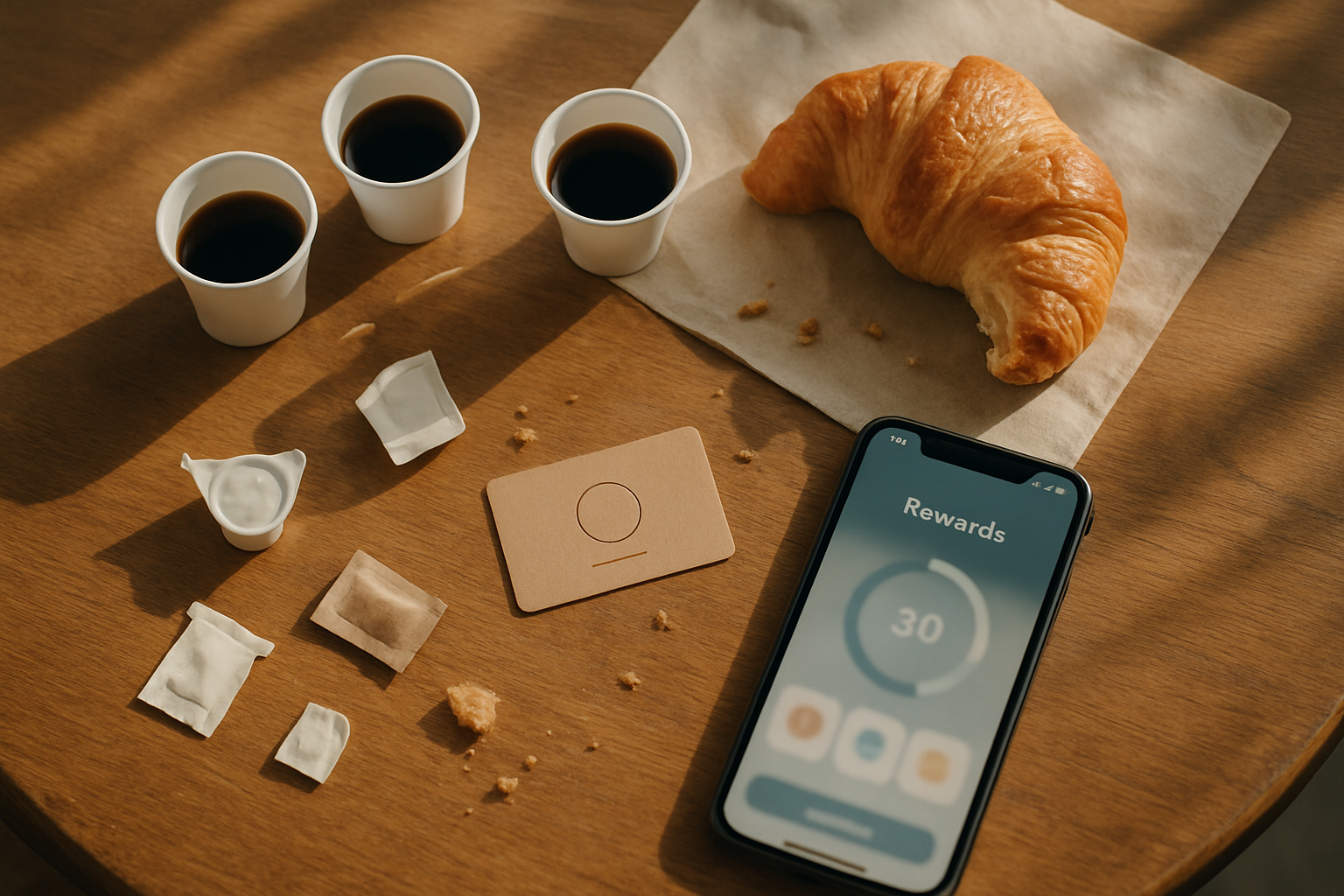
There is a very specific kind of annoyance that hits when you buy coffee, groceries, gas, and takeout all week, then realize you could have earned enough points for a free meal if you had just used the app you already downloaded. Honestly, reward programs are not exciting until they quietly knock $8, $15, or $40 off a month you were going to spend anyway.
The trick in 2026 is not joining every program with a giant neon “FREE” sign. That is how you end up with 47 marketing emails and a phone full of apps you never open. The good programs are the ones tied to purchases you already make, offer rewards you can actually redeem without jumping through hoops, and have nearby locations. Real talk, a free cookie after spending $200 is not a lifestyle. A free entree, free grocery credit, or useful cash back? Different story.
Here are the 10 reward programs I think are genuinely worth checking near you, plus exactly how to use them without turning saving money into a part-time job.
1. Starbucks Rewards, best if you already buy coffee there
Starbucks Rewards is one of the easiest programs to understand because the app does most of the work. You earn Stars on eligible purchases, and rewards can be redeemed for things like drink customizations, brewed coffee, bakery items, drinks, food, and merchandise depending on the Star level and current terms.
The value is strongest when you use Stars for higher-priced drinks or food, not a plain drip coffee. If a handcrafted drink costs $6 to $8 in your area, redeeming a reward for that instead of a $3 coffee is just common sense. The program also regularly runs bonus-Star challenges, such as earning extra Stars by ordering on a certain number of days or buying a particular category.
What makes it worth it: order ahead, track offers in one place, and redeem rewards on purchases that would otherwise feel overpriced.
What is less impressive: buying things you do not want just to complete a challenge. A “buy four drinks, get 100 bonus Stars” offer is only a deal if you were already going to buy four drinks. Okay but seriously, do not spend $25 to unlock a reward worth $5.
Use the app’s store locator before signing up if you are not sure what is near you. This sounds obvious, but location matters. A great reward program is useless if the closest store is 30 minutes away.
2. Dunkin' Rewards, surprisingly good for regulars
Dunkin' Rewards is one of the better coffee-and-breakfast programs for people who visit often. Members earn points on qualifying purchases and can redeem those points for food and drinks. The app also tends to feature rotating offers, including bonus points, discounted menu items, and occasional free-item promotions.
If you are already grabbing coffee, hash browns, or a breakfast sandwich on the way to work, the math can add up fast. A $4 coffee twice a week is about $32 a month. Add a couple food orders and the points become a real reward instead of some abstract number trapped in an app.
The Dunkin birthday offer is something people search for a lot, but the more useful part of the program is the year-round member pricing and point earning. One birthday perk does not beat 12 months of app deals.
Best move: check the Offers tab before you place an order. Sometimes an offer must be activated first. Missing a one-tap activation is the kind of thing that makes saving money weirdly irritating.
For a broader look at apps that can make your regular purchases more rewarding, this roundup of apps that give birthday freebies is useful too, especially because many of those apps also send non-birthday coupons and member offers throughout the year.
3. McDonald's Rewards, one of the lowest-effort food apps
McDonald’s Rewards is not glamorous. It is just practical. Scan or order through the app, earn points, then redeem them for menu items. The app also frequently has app-only deals, and those deals can be more valuable than the points for people ordering for more than one person.
A typical example: if your local app offers a discounted meal bundle, a buy-one-get-one deal, or a reduced-price large fries, using that offer can save $2 to $6 immediately. Do that once a week and you are looking at roughly $100 to $300 over a year, assuming you were already going there. That is not “retire early” money, obviously. But it is grocery money. It is gas money. It counts.
The underrated strategy is to compare the deal section against the regular menu before ordering. Sometimes a bundle offer is a better value than a points redemption. Other times, your accumulated points cover the exact item you wanted. Use whichever gives the bigger discount that day.
My opinion: this is worth the app space if McDonald’s is genuinely in your rotation. If you go twice a year, skip it. You do not need a loyalty account for every fast-food logo on earth.
4. Chick-fil-A One, great when you have a local restaurant you visit
Chick-fil-A One earns points on qualifying purchases, with rewards available at different point levels. Many locations also send app members occasional surprise rewards, though those can vary by restaurant and are not something to count on as guaranteed income.
What I like here is that the rewards are useful. You can work toward things people actually order, like a sandwich, nuggets, fries, or a treat. If a sandwich meal in your area lands around $10 to $13, redeeming points for a higher-value entree and paying cash only for sides or drinks can stretch your budget better than redeeming the smallest available reward.
Open the app and check which restaurant is selected. Local restaurants can have different participation, availability, and promotions. That little location setting matters more than people think.
This one is also a reminder that “near you” is not just geography. It is your routine. A restaurant across the street from your job may be a better rewards pick than a technically better program across town that you never visit.
5. Panera Bread MyPanera, good coupons, uneven rewards
MyPanera is one of those programs where the targeted offers can be better than the base rewards setup. Members can get personalized offers, and the app is where you will usually find them. Depending on your account and location, that might mean a discounted soup-and-sandwich combo, a free bakery item with purchase, or a percentage-off offer.
The catch is that offers vary. Your friend may get a fantastic deal while your app shows something deeply unexciting. That is normal. Do not build your whole lunch routine around waiting for a free bagel.
Still, Panera is worth joining if you already go there. A couple $3 to $5 offers each month can add up to $36 to $60 a year. And if you are ordering for a group, checking the app before you place a catering or larger order can make a much bigger difference.
Use it like this: keep the account, turn off marketing notifications if they bug you, and look at the offers when you were already planning a visit. Do not let a coupon talk you into a $16 lunch you did not want.
6. CVS ExtraCare, boring name, serious savings potential
CVS ExtraCare is easily one of the strongest programs on this list for everyday household spending. This is not about getting a free donut. It is about reducing what you pay for toothpaste, shampoo, detergent, vitamins, cold medicine, paper products, and the random things you only remember you need at 9 p.m.
Members can earn ExtraBucks Rewards on qualifying purchases and receive personalized coupons through the CVS app or account. The exact offers vary, but the basic strategy has worked for years because it is so straightforward: combine a sale price, a manufacturer coupon when allowed, CVS digital coupons, and ExtraBucks. You do not have to do extreme couponing to make this worthwhile.
Say you need $20 in household basics. A $4 off $20 personalized coupon plus a $3 ExtraBucks reward from a prior purchase brings it to $13 before tax. That is a 35 percent savings without buying a garage full of laundry detergent.
This is where having a decent source for store coupons and promo codes can help. Check the offer terms, make sure the item and size qualify, and do not assume every coupon stacks. CVS can be excellent, but the fine print is very much part of the game.
This one’s underrated: use ExtraCare for things you need anyway, then roll the rewards into the next household purchase. That is the whole system. No chaos required.
7. Target Circle, the easiest big-box store program to use
Target Circle is free to join and integrates discounts, personalized deals, and earnings in the Target app. If Target is one of your regular stops, this is almost automatic savings. The app lets you add offers before checkout, and Target often has category deals for groceries, cleaning supplies, baby items, beauty products, school supplies, and seasonal basics.
Target Circle is especially useful because a lot of the savings are percentage-based. A 20 percent offer on a personal-care item you were buying anyway can beat a tiny point reward. Watch for category-wide offers too, like spending a set amount on groceries or household essentials and earning a gift card or Circle reward. Terms change frequently, so read the offer rather than relying on an old social-media screenshot.
For example, a 15 percent Circle offer on a $40 household restock saves $6. Pair it with a manufacturer coupon in the app where eligible, and you may get close to $10 off without making your cart weird.
Best habit: open Target’s app while you are making your list, not while you are already standing at self-checkout. Add the offers early, then use pickup when possible so you are less tempted by the “I came in for toothpaste and left with a lamp” problem.
8. Kroger Plus, or your local Kroger-family grocery program
If you live near Kroger, Ralphs, Fry’s, King Soopers, Smith’s, Fred Meyer, or another Kroger-family store, joining the loyalty program is basically non-negotiable. Many shelf prices are listed as digital-deal or loyalty-card prices, which means skipping the account can mean paying more for the exact same groceries.
The Kroger app is where the real savings happen. You can clip digital coupons, load personalized deals, see weekly ad pricing, and sometimes earn fuel points on qualifying purchases. Grocery savings are not as flashy as a free coffee, but they are larger because food is one of the biggest recurring expenses in most budgets.
Imagine you save just $8 per weekly grocery trip through digital coupons and member prices. That is $416 over a year. Make it $15 a week with sale planning, and now you are at $780. That is why grocery programs deserve more attention than the tiny freebie apps.
Do not clip every coupon just because it exists. Clip things you buy, look for repeat staples, and check unit prices. A “deal” on a giant package is not a deal if half of it gets thrown away.
And yes, discounted gift cards can sometimes lower the total even more if you are buying from a retailer you know you will use. A reliable guide to discounted gift cards is helpful for learning what to watch for, especially around resale safety and actual discount percentages. A 3 percent discount is fine. A suspicious 40 percent discount from a random seller? Hard pass.
9. 7Rewards and Speedway Speedy Rewards, small purchases that quietly add up
Convenience-store rewards can be very location-dependent, so I am grouping these as a practical category rather than pretending everyone has the same stores nearby. 7Rewards works at participating 7-Eleven locations, while Speedy Rewards is useful in areas with Speedway stores. Both are built around earning points or credits from fuel, drinks, snacks, and convenience purchases.
These programs shine if you regularly buy gas or grab a drink on the road. They are not magical if you are paying inflated convenience-store prices for everything. That part needs to be said.
Use the rewards program for purchases you would make anyway, especially fuel where eligible and app-priced drinks or snacks. A free drink may only be worth $2 to $3, but if you normally buy one a few times a week, redeeming points for it can free up $100 or more over a year. Not life-changing alone, but absolutely worth scanning a barcode for two seconds.
One caution: do not drive out of your way to chase cents off gas unless the math works. Saving 10 cents a gallon on 12 gallons is $1.20. Burning extra gas and time to get it can erase the benefit immediately.
10. Fetch, the no-brainer receipt app for brands you already buy
Fetch is different from a store loyalty program because it gives you points for eligible receipts and participating brands across many retailers. You scan receipts, collect points, and redeem them for gift cards. The reward rate can vary a lot depending on brand offers, so this is not the place to expect huge money from every grocery receipt.
But it is almost zero effort if you already have receipts. That is why I like it.
The most realistic approach is to scan every qualifying receipt promptly, check for bonus brand offers before a grocery trip, and redeem only when you have enough points for a gift card you will definitely use. A $10 grocery, coffee, or big-box gift card is real value. You did not get rich scanning receipts, but you offset something you were going to pay for.
Be skeptical of anyone claiming receipt apps will pay your rent. They will not. But collecting $25 to $75 a year from receipts you would otherwise throw away is totally plausible for many regular users, especially if their household buys participating brands.
Birthday Hunter is a free app and website where you can find deals, freebies, and rewards year-round, which is useful when you want more than one retailer’s app telling you about its own offers. It is a good starting point for spotting nearby promotions without having to manually search “free stuff near me” every weekend.
How to make reward programs actually save money
Joining is the easy part. Using them without spending more is the actual skill.
- Pick three to five programs tied to your real routine. Start with your grocery store, pharmacy, coffee spot, one fast-food or lunch option, and a receipt or cash-back app. That is enough.
- Use one payment method when possible. If you use the same card or mobile wallet for regular spending, it is easier to notice patterns and keep receipts organized.
- Check offers before you shop. Two minutes at home can save $5 to $15. Searching for a coupon after you have paid saves exactly zero dollars.
- Set a reminder to redeem expiring rewards. Monthly is fine. You do not need to obsess over points daily.
- Use rewards on expensive items. If a reward can cover either a $3 item or a $7 item, take the $7 item unless there is a reason not to.
- Read the purchase requirement. “Free with purchase” is not automatically free. Sometimes the required purchase is still a good deal, sometimes it is absolutely not.
- Delete programs that do not earn their spot. If you have not used an app in six months, it is probably just collecting data and sending notifications.
People get very focused on the word “free,” but a 20 percent discount on groceries you were already buying can beat a free side item that requires a $14 purchase. Real talk, boring savings are often the best savings.
A quick reality check on freebies near you
Offers change by city, franchise owner, account history, and sometimes the weather, apparently. A national brand may advertise a reward, but your nearby location could have exclusions, limited participation, or a different redemption process. Always check the app for your selected store before making a special trip.
Also, do not ignore the deals that show up around personal milestones if you are already enrolled in programs. They can be a nice bonus. If you are organizing your own list of birthday places for later, these resources on birthday freebies and free birthday food offers can help you separate real offers from old internet rumors. Happy birthday to you is nice, sure, but year-round savings are where the dependable money is.
The best reward program is not the one with the loudest app notification. It is the one that saves you money on something already on your list. Start with the store you visit every week, use the offers you can explain in one sentence, and let the tiny wins stack up.
Brands mentioned in this post


The Ultimate Birthday Freebies List: 20 Ways to Celebrate and Save Big
Next PostBest Birthday Apps for Managing Multiple Freebies with One Easy Platform
Related Posts
Related Guides
Los Angeles Birthday Freebies 2026: 30 Free Meals, Desserts, and LA Deals
Thirty Los Angeles birthday freebies for 2026: LA-born chains with real rewards programs, Westside and Downtown institutions, Valley and Eastside spots, plus the free-admission attractions that make a no-cost LA birthday day possible.
Seattle Birthday Freebies 2026: 30 Free Meals, Coffee, and Ice Cream Deals
Thirty Seattle birthday freebies for 2026: Seattle-born coffee and ice cream programs, Capitol Hill and Ballard institutions, Pike Place traditions, and the free Seattle attractions that carry a no-cost birthday day.
Spokane Birthday Freebies 2026: 25 Free Meals and Inland Northwest Deals
Twenty-five Spokane birthday freebies for 2026: Spokane-born burger and coffee institutions, the casino birthday programs unique to the Inland Northwest, Riverfront Park, and the chains whose rewards actually reach Eastern Washington.
Atlanta Birthday Freebies 2026: 30 Free Meals, Desserts, and ATL Deals
Thirty Atlanta birthday freebies for 2026: Georgia-born chains with real rewards programs, Westside and Buckhead institutions, the free Atlanta attractions worth a birthday afternoon, and how to plan an ATL birthday week.