Best Shop current gift cards with store prices, product images, and checkout links. to Shop Right Now
Gift cards are one of those things people call “boring” right up until they are staring at a checkout total and realize a $50 card bought for $42 is basically...
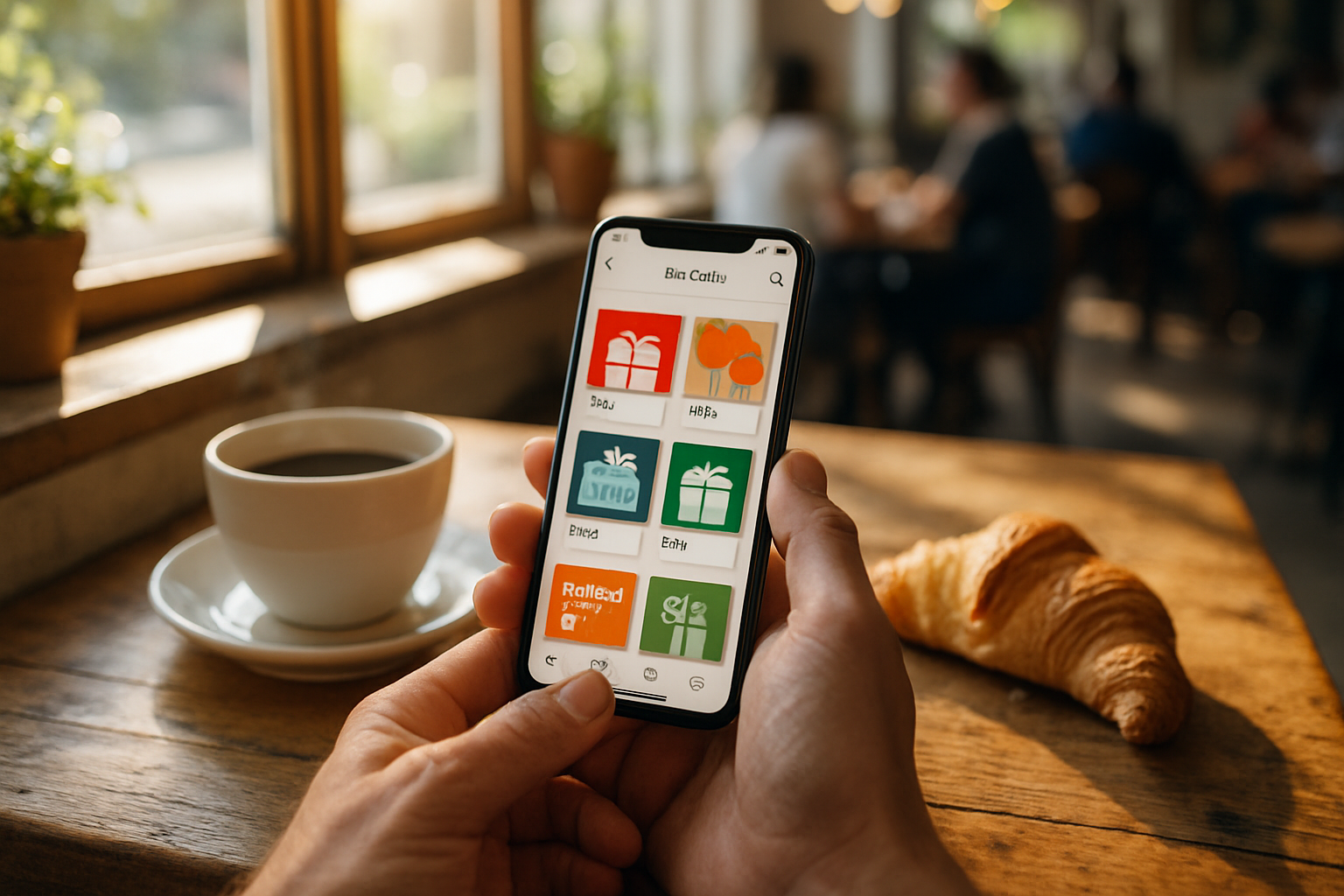
Gift cards are one of those things people call “boring” right up until they are staring at a checkout total and realize a $50 card bought for $42 is basically eight dollars found in the couch cushions. Okay but seriously, that is real money. Especially when you were already going to buy the thing.
The best current gift card deal is rarely the one with the loudest percentage off. A discounted card only saves you money if you will actually use it, the balance is verified, and the store price is not quietly higher than everywhere else. This is why I like shopping gift cards with the product price right there, product images you can recognize, and a real checkout link instead of a mysterious marketplace listing.
If you want one place to compare the live options, start with the Birthday Hunter shopping storefront with current products and stores. Think of it as the practical version of gift-card browsing. Less scrolling through expired social posts, more seeing what is available now.
What makes a gift card deal actually good?
A $100 card for $90 is a clean 10% discount. Great, if it is for a store where you already buy groceries, shoes, beauty products, pet supplies, travel, or gifts. A $25 card for $20 is an even better 20% off, but it is not a win if you spend the remaining balance on stuff you never wanted.
My personal rule is simple: only buy a gift card if it checks at least two of these boxes.
- You had planned to spend there anyway. The card is a payment method with a discount, not permission to shop.
- The balance and issuer are clear. You should know whether it is a store-issued digital card, a physical card, or a resale listing.
- The discount beats the hassle. A 2% discount can be fine for a huge purchase. For a $15 lunch, I am not making three accounts and waiting for an email.
- You can use the full value. A $50 card that leaves you with $4.73 trapped in an account is less exciting than it looked.
- The store runs sales or allows coupon stacking. This is where the math gets fun.
Honestly, stacking is the whole game. A discounted gift card plus a clearance item plus a store coupon can turn an ordinary purchase into a genuinely excellent deal. Before paying, check the store’s coupon policy and compare the offer against the current store coupons and promo codes. Some shops allow a promo code with gift-card payment, while some coupon exclusions are brutal. Read the fine print before you get emotionally attached to the cart.
Shop discounted cards by the purchase you already have planned
There is no universal “best” gift card because a 15% dining card is useless to someone saving for a mattress, and a home-improvement card is not much help when you need a last-minute birthday celebration gift. Here is how I would prioritize the current categories.
1. Everyday essentials first: groceries, fuel, and household spending
These are the least glamorous cards and often the smartest. If a store card covers groceries, pharmacy items, household basics, or fuel, even a 3% to 5% discount has value because the spending is recurring. You are not trying to create a shopping trip. You are lowering the cost of a trip that was already happening.
For a $600 monthly household spend, a consistent 5% effective discount works out to $30 a month, or $360 over a year. That is not “free money,” obviously. You still spent $570. But it is a better deal than paying full price for the exact same necessities.
Watch for three catches:
- Some grocery gift cards exclude alcohol, lottery products, third-party gift cards, delivery fees, or fuel.
- Digital gift cards can take time to arrive, so do not assume a last-second checkout will work while you are in the parking lot.
- Promotional gift card offers sometimes require spending in one transaction before tax, and the bonus card may have its own expiration rules.
This category is underrated because it feels too responsible to be exciting. But a useful discount is better than a flashy discount every time.
2. Restaurant cards can be a solid deal, with one big caveat
Dining gift cards often show up in seasonal promotions and warehouse-club bundles, such as a $100 restaurant value sold for $80 or $85. That can be excellent if the restaurants are already in your rotation and the card works at your location.
The caveat is that restaurant-branded offers can be regional. Before buying, confirm the participating locations, whether gratuity can be paid with the card, and whether the card works for online ordering or delivery. A discount disappears fast if you end up ordering extra food just to drain a balance.
If you are planning around birthday rewards, restaurant gift cards can stretch your free item or reward further. Pair a birthday entrée, drink, or dessert offer with a card you bought at a discount and suddenly a normal dinner gets very cheap. For ideas beyond gift cards, the free birthday food offers are worth checking before you pick the restaurant.
Also, do not confuse a birthday reward with a gift card. Rewards programs typically require an account, may require a recent purchase, and often have limited redemption windows around your birthday. The gift card is just the discounted way to cover anything the reward does not cover.
3. Beauty, apparel, and department-store cards are where stacking can shine
This is the category where people can save a lot, then accidentally give it all back by impulse shopping. So yes, buy a discounted beauty or clothing gift card, but only after you have a list.
Look for cards tied to stores that regularly run sale pricing, clearance sections, seasonal promotions, loyalty rewards, or pickup discounts. A 10% off gift card used on an item already reduced 30% is not technically 40% off the original price, because the percentage math does not add straight across. But it is still strong:
- Start with a $100 item.
- A 30% sale makes it $70.
- Pay with a gift card purchased at 10% off, so you paid $63 to get $70 of store value.
- Your effective out-of-pocket cost is $63, a 37% savings off the original $100 price.
That is the kind of math I will happily do in a Notes app at midnight.
Beauty cards can be particularly useful around a birthday because brand loyalty programs sometimes offer birthday gifts, points, or timed coupons. If makeup, skincare, fragrance, or hair products are on your list, compare that store’s current promotion with the beauty and makeup birthday freebies page. Free mini products are not the same as cash, but if you were replacing cleanser anyway, a free add-on is still a win.
4. Home improvement and furniture: buy later, not earlier
A discounted home-improvement or furniture gift card can make sense for a specific project, such as paint, a replacement appliance, shelving, or a planned furniture purchase. The key phrase there is specific project.
I do not love buying a $500 card six months before you need it. Store policies change. Gift cards can be lost. A retailer can discontinue an item. And holding money in a store-specific card means you cannot use that cash anywhere else if a better deal pops up.
For a planned $1,000 purchase, though, a 10% discount means you paid $900 for $1,000 in store credit. That is meaningful. Just check whether the card can be used on sale items, online orders, delivery charges, installation, or third-party marketplace merchandise. Those restrictions vary a lot.
5. Travel and hotel cards: great only when the booking is close
Travel gift cards look exciting because the dollar amounts are bigger. A $500 travel card bought for $450 sounds like instant vacation savings. It can be. But this is one area where the booking terms matter more than the headline discount.
Check whether the card works for room rate only or can cover taxes, resort fees, baggage, seat selection, rental cars, and incidentals. Some hotel certificates require booking directly. Some airline credits have redemption limitations. And some travel cards have a fixed expiration date even where ordinary store gift cards may not.
My opinion: buy travel cards only when you are within the booking window and have compared the final price through the card issuer against other reputable booking options. A lower sticker price that comes with a $40 resort fee is not a lower final price. Real talk.
Use current store prices and product images as a fraud filter
Product images are not just there to make a storefront look nicer. They help you verify that you are buying the card you think you are buying. A legitimate product page should make the merchant name, card denomination, delivery method, price, and checkout path easy to see.
Before you hit purchase, confirm these details:
- Exact denomination: Is it a $25 card, a variable-load card, or a bundle of several cards?
- Digital versus physical: Digital is convenient, but double-check the email address and delivery timing. Physical cards may involve shipping fees or delays.
- Store price: Compare the listed card price with the actual face value. If a $50 card costs $50, it may still earn a card reward, but it is not a discounted gift card.
- Fees: A purchase fee, shipping charge, or activation fee can wipe out a small discount.
- Checkout destination: The checkout link should lead to a recognized retailer, authorized seller, or established marketplace page. If the destination looks wildly different from the listing, pause.
- Terms: Read whether the card expires, has an inactivity fee, is nonrefundable, or is limited to certain locations or products.
A deal that feels too good usually has a reason. Sometimes the reason is harmless, like a gift card being sold during a limited promotion. Sometimes it is a confusing restriction. Sometimes it is just a sketchy seller. Do not treat a gift-card code like a normal package order. Once a code is revealed or redeemed, getting help can be much harder.
The safe way to buy current gift cards
If you are using a storefront, product listing, or checkout link to shop gift cards right now, here is the low-drama process I recommend.
Make the purchase list before opening the gift-card page
Write down the store, estimated total, and when you expect to spend it. Example: “$78 in pet food within two weeks,” “$120 in skincare during the sale,” or “$300 for a hotel booking this month.” This instantly tells you whether a $25, $50, or $100 denomination makes sense.
It also prevents the classic problem of buying $200 at a retailer because the discount was good, then realizing you only needed $63 worth of stuff.
Compare the effective savings, not just the badge
Use this formula:
Effective discount = (face value minus total amount paid) divided by face value.
If a $50 card costs $45 plus $1.99 shipping, you paid $46.99. Your savings are $3.01, which is about 6.02%, not 10%. Still potentially useful. Just not the deal the first number made it seem like.
If you get reward points or cash back through your payment card, treat that as a bonus, not the reason to buy. A 2% card reward on a 3% discount is nice. It is not worth buying a card you will struggle to use.
Buy the smallest denomination that covers the plan
This sounds boring. It saves money.
Suppose you expect a $54 order and can buy a $50 card at 10% off. You pay $45, then use $4 of regular payment at checkout. Total cost: $49. That is clean. Buying a $100 card for $90 would leave $46 tied up at the store, and that leftover value has a sneaky way of turning into an unnecessary second order.
Save the confirmation and check the balance early
For digital cards, save the delivery email, order confirmation, and any card number or PIN somewhere secure. For physical cards, keep the receipt until the balance is used. If the issuer provides a balance checker, verify the card as soon as it arrives, especially when it is a gift or resale purchase.
Do not post gift card photos online. Do not send a visible barcode or code over a casual screenshot. That sounds obvious, but gift card theft is often that simple.
Birthday rewards can make gift cards go further
Gift cards are not just holiday presents or last-minute “I did not know what to get you” options. Used strategically, they are a budgeting tool for birthday rewards too.
Say you have a restaurant birthday offer for a free dessert or a beauty-store birthday gift. Buy only the amount of discounted store value you will realistically use, then pay for the rest with your normal card. You can enjoy the reward without spending $75 just to justify owning a $75 gift card.
Birthday Hunter is a free iOS app that helps you find birthday freebies and deals, which is handy when you are trying to line up a birthday celebration without opening twelve different brand apps. If you are building a full birthday plan, the master list of birthday freebies is the better starting point than guessing which programs still send rewards.
For Canadians searching specifically for birthday freebies Vancouver or birthday freebies Toronto, check the individual offer’s location terms before relying on it. A national chain may participate differently by province, and local availability can change. The same goes for birthday rewards that say “at participating locations.” That phrase does a lot of work.
And yes, some people prefer no-account deals. Fair. If you do not want another inbox signup, look through the list of birthday freebies with no signup required. Just set expectations, because the biggest and most reliable birthday offers often do require joining a loyalty program ahead of time.
Gift cards I would skip, even at a discount
Not every discounted card deserves a checkout click. Here are the ones I would be skeptical about.
- Cards for stores you “might” use someday. Maybe is not a spending plan.
- Tiny discounts with shipping fees. Saving $1.50 and paying $2.99 for delivery is backwards.
- Cards from unfamiliar sellers with no meaningful buyer protection. A 25% discount is not worth a disputed balance.
- Huge denominations for a one-time need. This is how store credit becomes clutter.
- Cards with a short deadline you cannot meet. A limited promotion can be great, but only if your purchase is actually scheduled.
- Gift cards used to finance a purchase you cannot afford. A discount is not a budget. This one is unglamorous but true.
I am also not a huge fan of buying cards merely because a social post claims “up to 40% off.” “Up to” is doing even more work than “participating locations.” Find the actual denomination, actual available inventory, actual final checkout price, and actual restrictions. Then decide.
A practical checkout checklist
Right before you buy, run through this fast list:
- Is this a store I will spend at within the next 30 to 90 days?
- Did I compare the card’s price with its face value after all fees?
- Can I use it on the products, sale items, and order channel I need?
- Am I buying only the amount I expect to use?
- Did I check for a store coupon, loyalty offer, or birthday reward first?
- Is the checkout link going to a legitimate, recognizable seller?
- Will I save the receipt and card details securely?
If the answer is yes across the board, go for it. That is a clean savings move. If you are squinting at unclear terms or mentally inventing reasons to spend the balance, close the tab. There will be another deal. There always is.
FAQ
Are discounted gift cards safe to buy online?
They can be safe when purchased from the retailer directly, an authorized seller, or an established marketplace with clear buyer protections. Check the final price, delivery method, seller information, terms, and balance policy. Avoid deals that demand payment by unusual methods or make it difficult to verify the card’s source.
Can I use a store coupon and a gift card together?
Usually, a gift card is simply a payment method, so many retailers allow coupons or promo codes first and gift-card payment afterward. But coupon exclusions vary. Check the offer terms, especially for clearance, premium brands, third-party products, and online-only codes.
Is it better to buy a $100 gift card or several smaller cards?
Buy the denomination closest to your planned spending. A single $100 card can be convenient for a $100 purchase, but smaller cards reduce the risk of unused balances if your plan changes. The best choice depends on the discount, fees, and how much you truly expect to spend.
Do gift cards expire?
Many standard retail gift cards do not expire, but promotional cards, travel credits, bonus cards, and certain region-specific products can have deadlines or restrictions. Always read the card terms before checkout. Do not assume every card follows the same rules.
Best Shop current jewelry with store prices, product images, and checkout links. to Shop Right Now
Next PostBest Shop current gift baskets with store prices, product images, and checkout links. to Shop Right Now
Related Posts


Related Guides
Beauty Birthday Freebies: Sephora vs. Ulta and How to Claim
Compare Sephora and Ulta birthday gifts, online purchase requirements, store coupons and signup timing. Build a beauty birthday trip without surprise spending.
The Ultimate Guide to Birthday Freebies: 100+ Places to Celebrate for Free
Discover over 100 restaurants, retailers, and entertainment venues offering free items, meals, and gifts on your birthday. Our comprehensive guide helps you maximize your birthday celebrations without spending a dime.
50 Best Birthday Freebies and Deals to Claim This Year
Explore our curated list of the 50 best birthday freebies and deals available this year. From free meals and desserts to retail gifts and entertainment, maximize your birthday celebrations with these valuable offers.
Birthday Freebies for Kids: Gifts, Discounts and Claim Rules
Compare kids birthday offers, including Build-A-Bear and Red Robin. See age rules, membership requirements and which offers still require a purchase.