How to Attract Birthday Shoppers and Increase Sales with Birthday Hunter
There is a weird little window before someone’s birthday when they are suddenly very open to spending money.
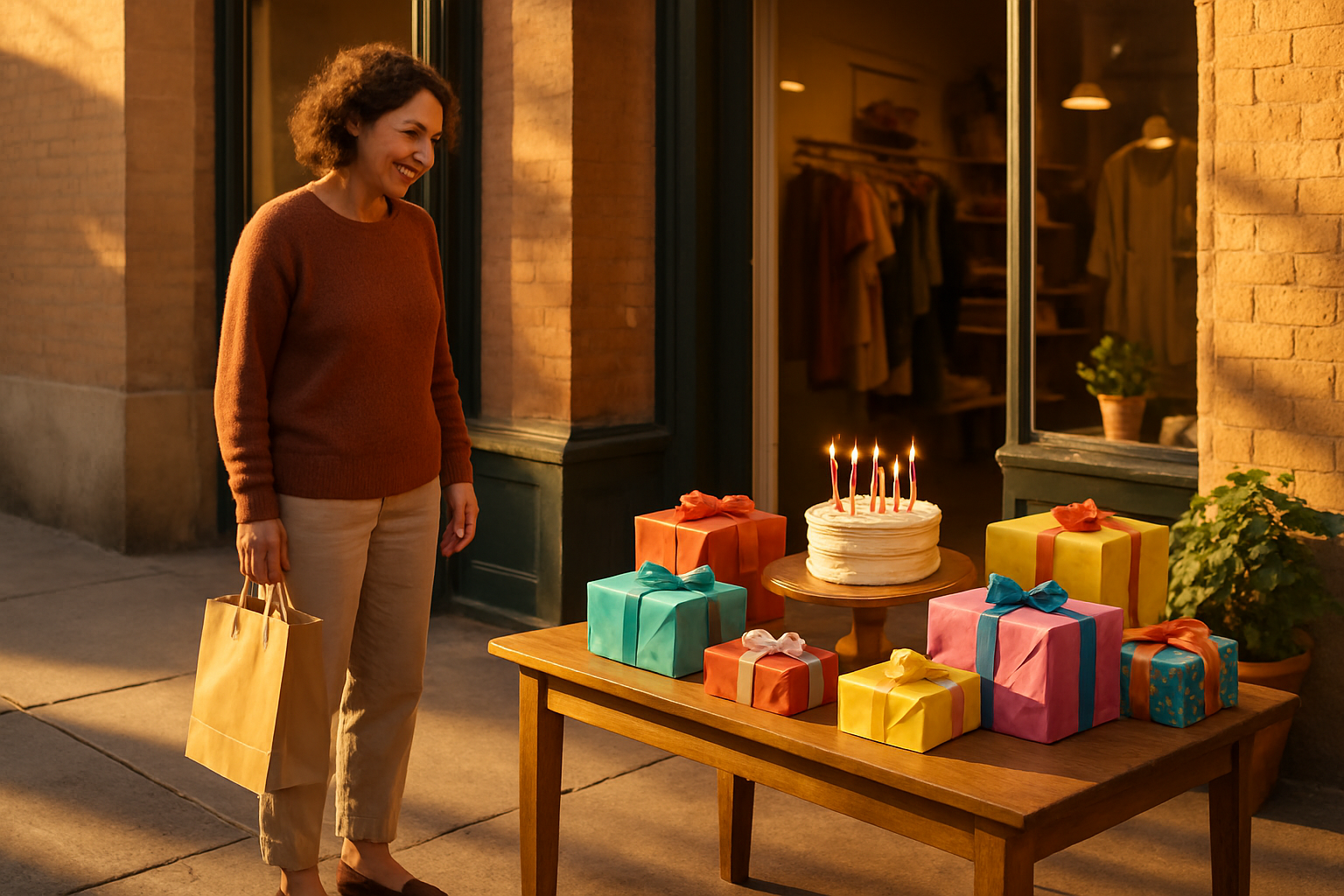
There is a weird little window before someone’s birthday when they are suddenly very open to spending money. Not just on cake. They’re booking dinner, hinting about gifts, buying an outfit they “needed anyway,” inviting friends out, and searching things like “Dairy Queen birthday freebie” at 11:48 p.m. because apparently planning ahead is for other people.
That is the window businesses should care about.
Birthday shoppers are not always hunting for the biggest discount in the world. A lot of them want to feel noticed, get something fun, and have a reason to choose your place instead of the five other places in the same shopping center. Give them a decent birthday offer at the right time and you can turn one free cookie, $10 credit, or tiny beauty gift into a larger order, a new loyalty member, repeat visits, and maybe a customer who tells their entire group chat where to go.
I love freebies, obviously, but I’m also kind of ruthless about them. A “birthday reward” that requires three purchases, a 48-hour redemption window, and an exclusion list longer than a CVS receipt is not charming. It is annoying. The good programs make the customer feel like they won. The great programs make them come back after the birthday candles are gone.
Why birthday shoppers are unusually valuable
Birthdays create a deadline, and deadlines get people moving. Someone might ignore a generic “20% off this weekend” email. But put “Happy birthday to you, your reward is waiting” in their inbox and suddenly they remember the account they made eight months ago.
There are a few reasons birthday offers work better than random discounts:
- People expect them. This sounds obvious, but expectation matters. A birthday reward feels like part of being in a rewards program, not like a desperate clearance alert.
- Customers are already planning a purchase. Restaurants, coffee shops, beauty stores, entertainment venues, pet stores, and gift businesses all fit naturally into birthday spending.
- They bring other people. One birthday person can mean a table of four, six, or twelve. The free item is often the least profitable part of the visit, but the group order is where the money is.
- They give you usable timing data. With permission, a birth month or birth date lets you send a relevant offer before the customer has picked a competitor.
- They feel personal without requiring a salesperson to be weird about it. A simple email or app message can do a lot of the work.
The trick is not just handing out free stuff. The trick is building an offer that feels generous enough to earn attention and structured enough that it does not become a money bonfire.
People who browse a big birthday freebies list are comparing you against brands that have trained them to expect a reward. You do not have to outspend every giant chain. You just need to make your offer clear, easy to claim, and worth leaving the house for.
Start with an offer people can understand in five seconds
My personal rule: if I have to read the fine print twice to figure out what I get, the offer has already lost some of its magic.
A good birthday deal answers three things right away:
- What does the customer get?
- When can they use it?
- What do they need to do first?
“Enjoy a complimentary birthday dessert with any entree” is clear. “Get $10 birthday credit with a $30 purchase, valid during your birth month” is also clear. “A surprise birthday reward may be loaded into your account subject to participation and eligibility requirements” is... technically language, I guess.
For a restaurant, a free dessert or appetizer with a qualifying entree is often smarter than a completely free meal. If your average entree is $18 to $25 and dessert costs you a fraction of its menu price, the reward can encourage a full check without giving away the whole visit. The birthday customer still feels celebrated, especially if the dessert arrives with a candle and the staff does not make a huge public singing production unless the customer is clearly into that.
For retail, a fixed credit can work beautifully. Think $5 off $25, $10 off $40, or $15 off $75. Those thresholds should come from your actual average order value, not a number somebody picked because it sounded neat. If your typical order is $38, a $10-off-$40 birthday offer gives shoppers a very easy reason to add one more item to their cart. That’s the whole game.
Beauty is especially good at this. A small, useful gift, travel size product, bonus points, or a credit toward a larger purchase can feel more exciting than a bland percentage-off code. People actively search for beauty and makeup birthday freebies because the category understands something other retailers miss: surprise and discovery are part of the reward.
Use the birthday window, not just the birthday date
A one-day-only birthday deal sounds festive until you remember people have jobs, school, travel, family stuff, and a birthday that lands on a Tuesday. Then it just feels like you set a trap.
For most small and medium businesses, I think a birth-month offer is the sweet spot. It gives customers flexibility, lowers customer-service headaches, and makes it more likely they’ll pick a day when they can bring friends or spend more. If a full month feels too open-ended for your margins, try 14 days before through 14 days after the birthday. That is still a 29-day window, which is generous without being endless.
Restaurants can also use timing strategically:
- Send the first message 21 to 30 days before the birthday. This is the planning message. Mention reservations, group dining, catering, party packages, or pre-orders if those apply.
- Send a reminder about 7 days before. Keep it simple. The reward, expiration date, and a direct path to book or order.
- Send one final nudge near the end of the redemption period. Not five reminders. One. Nobody needs a birthday reward turning into a hostage situation.
For coffee shops and quick-service places, shorter can be okay because the visit is low effort. A Starbucks birthday reward is a good example of why convenience matters. Eligible Starbucks Rewards members can receive a birthday reward through the app, but the program has eligibility requirements and a limited redemption period, so customers need to be engaged before the actual day. The lesson for businesses is not “copy Starbucks exactly.” It’s that app-based rewards are easy to use when the customer already has a habit of opening the app.
If you are building an app or mobile-first loyalty program, Birthday Hunter is a free iOS app that helps you find birthday freebies and deals, and that kind of behavior is worth paying attention to. People often look up offers while they are making plans, sitting in a parking lot, or deciding where to stop next. Your reward should be easy to find and redeem on a phone, full stop.
Make signup feel fair, not sneaky
You need a way to know the customer’s birthday, sure. But asking for a full birth date before you’ve given them any reason to trust you can be a conversion killer.
For many businesses, collecting just the birth month is enough. You can send a month-based offer and avoid asking for more personal information than you really need. If you need the actual date to prevent duplicate or early redemptions, explain why in plain English and make it optional if possible.
Here’s a signup flow I’d actually tolerate:
- Email address or phone number
- First name
- Birth month, or full birthday if necessary
- A very clear checkbox for marketing consent
- Instant confirmation explaining when the reward will arrive
That’s it. Do not ask for mailing address, gender, favorite color, three product categories, and the name of their childhood pet just to send a free scoop of ice cream. I know marketers love data. I work in marketing. Still, sometimes the form is the reason you are getting 18 signups instead of 180.
Also, be honest about lead time. If customers must join at least seven days before their birthday, say that where they can see it. Some chains require advance enrollment for birthday rewards, and that is fair enough as long as it is not hidden in teeny tiny legal text. People looking for birthday freebies without signing up are telling you exactly what frustrates them: they hate being surprised by a requirement after they’ve already gotten excited.
Build the reward around your real margins
Free does not have to mean reckless.
The best birthday offer depends on what you sell, how often customers come back, and what your average transaction looks like. A bakery has different options than a clothing store. A salon has different options than a bowling alley. Please do not copy a restaurant reward if your inventory is expensive and limited, that is how “fun promotion” becomes “why did we do this to ourselves.”
For restaurants and food businesses
A free dessert with an entree is the classic for a reason. It is familiar, inexpensive relative to the full check, and easy for staff to explain. A free appetizer with a $20 or $25 purchase can work too, especially if appetizers encourage drinks and shared plates.
A Dairy Queen birthday offer, depending on the current app and location setup, is the kind of deal customers naturally search for because treats feel birthday-ish. If you operate a dessert spot, your offer does not need to be giant. A free mini item, an upgrade, or a buy-one-get-one reward can be plenty if it has a little delight factor.
For a higher-end restaurant, skip the cheesy coupon aesthetic. Offer a complimentary celebratory dessert, a glass of sparkling wine where legally appropriate, or a birthday menu add-on tied to a reservation. The offer should match the experience. A $5 barcode email at a nice dinner place feels off.
For retail and e-commerce
Use a credit or a gift-with-purchase. A $10 birthday credit with a $40 minimum is usually more compelling than 15% off, because customers can instantly picture the value. Gift-with-purchase works best when the gift feels like a real product, not a leftover sample nobody wants.
Try to protect your economics with smart rules:
- Set a reasonable minimum purchase if you need one.
- Exclude clearance only if you truly have to, because exclusions make people grumpy fast.
- Let the reward stack with loyalty points if possible.
- Give online shoppers a code and store shoppers a barcode, ideally from the same account.
- Use a single redemption per member per year and state it plainly.
Discounted gift cards can be a sneaky-good companion to birthday marketing, especially for shoppers buying presents for someone else. If you sell gift cards, feature them in the pre-birthday email as an easy option for friends and family. And if your audience is deal-focused, there are already shoppers checking discounted gift card deals before they decide where to spend. You want your brand in that consideration set, not forgotten until somebody needs to return something.
For service businesses
Salons, spas, fitness studios, car washes, photo studios, and local entertainment businesses should not automatically default to a percentage off. Give a specific upgrade instead.
A salon could offer a complimentary deep-conditioning treatment with a color or cut appointment. A car wash could offer a free upgrade to a premium wash. A fitness studio could give a guest pass or a bonus class credit. A bowling alley could include a free arcade credit with a party booking. These rewards have a tangible “oh fun” quality, and that matters more than people think.
Just make the booking process frictionless. If the birthday reward requires calling during business hours, quoting a code, then waiting for a manager approval, you have created work, not joy.
Give people a reason to bring the group
A birthday customer is often the decision-maker, but they rarely spend alone. This is where businesses leave money on the table by treating the reward like a solo coupon instead of a small event trigger.
If you run a restaurant, add an optional reservation prompt in the birthday email: “Celebrating with friends? Reserve a table for 4 or more.” If you have a group package, show the starting price and what’s included. Do not make people email you for basic information. That’s so 2012.
For retail, create a shareable offer that does not cheapen the birthday member’s reward. Example: the birthday member gets $10 off $40, and a friend they refer gets 15% off a first purchase. For classes or services, let the birthday customer bring one guest free with a paid booking. You gain a potential new customer and the celebrant gets a better experience.
It is also smart to merchandise around the moment. A birthday email about free birthday gifts should show products people might add: candles, cards, party decorations, a nicer dessert, flowers, a gift card, a travel-size beauty set. This is not evil upselling. It is helping people finish the task they were already trying to do.
Promote the offer where birthday people actually look
Your website should have one straightforward birthday-rewards page. Put it in your footer, loyalty section, or FAQ. Include the offer, sign-up deadline, redemption window, locations or channels where it works, and any purchase requirement. Search traffic is real here. People type extremely specific stuff when their birthday is coming up.
Social media can help, but it is not the whole strategy. A cute birthday post gets likes. An email sent three weeks before someone’s birthday gets a customer making plans. Different jobs.
Here’s the practical stack I’d use:
- Website landing page: the permanent home for the terms and signup.
- Email: your best channel for a planned birthday message, especially if your list is already active.
- SMS: useful for a short expiration reminder, but only for people who clearly opted in.
- App push notification: great for quick-service and frequent-purchase businesses.
- In-store signage: a QR code at the register can capture shoppers who see someone else redeem a reward and immediately want one too.
- Receipt messaging: include a small invitation to join the birthday club after a purchase.
And please make the offer searchable. If the page is buried behind a login wall, people will assume you do not have one. A customer who has to spend 10 minutes hunting may just go somewhere with a clearer deal. There are tons of apps that give birthday freebies, so your experience is competing with brands that already have the reward sitting visibly in an app wallet.
Measure more than redemptions
A high redemption rate sounds great, but it is not automatically proof the campaign made money. You need to see what happens around the redemption.
Track at least these numbers:
- Birthday member signups: How many new people join each month?
- Eligible members: How many members actually received a reward?
- Redemption rate: Redeemed offers divided by delivered offers.
- Average order value: Compare birthday redemption orders to regular orders.
- Incremental revenue: Did the reward create a new visit or simply discount a visit that would have happened anyway?
- Repeat purchase rate: Did the customer return within 30, 60, or 90 days?
- Referral or group impact: Did party sizes, add-on purchases, or referred signups increase?
Let’s say you send 2,000 birthday offers. If 300 people redeem, that is a 15% redemption rate. If those 300 orders average $42 and your normal average order is $31, that extra $11 per order is meaningful. But you still need to subtract the cost of the reward, any discount applied, and the marketing platform cost. This is why the “free anything for everybody!” approach is cute for about five minutes.
Test one thing at a time. Maybe compare a free dessert with entree versus $8 off $30. Or test a 14-day window against a birth-month window. Do not change the offer, email subject line, threshold, creative, and expiration date all at once, then announce that “the campaign performed differently.” Well, yeah. You changed the entire universe.
Don’t ruin it with bad fine print
The fastest way to turn a birthday reward into a complaint is to make the terms feel sneaky. There is a difference between sensible guardrails and gotcha rules.
Reasonable rules include joining before a stated cutoff, one reward per person annually, participating locations only, a minimum spend if the offer is substantial, and non-transferability. Fine. Normal.
Bad rules are the ones customers find out about at checkout. “Valid only from 2 to 4 p.m.” “Not valid on your actual birthday.” “Must spend $75 for a free $5 item.” “Available only if you made three purchases in the previous 30 days.” These can exist, technically, but then do not act surprised when shoppers call the deal lousy.
If you want to build loyalty before the birthday, use a transparent qualifying rule. For example, “Join rewards at least 30 days before your birthday and make one purchase by then to unlock your reward.” That gives customers a clear path. It is way better than vague eligibility language.
And train staff. This part is painfully unglamorous but huge. Your cashiers, hosts, and support team should know what the reward is, where it is accepted, and what to do if the barcode will not scan. The customer should never feel like they are trying to pull off a coupon scam because your team has never seen the promotion.
Birthday marketing works when it feels like a gift, not bait
The best birthday programs are simple: join, get recognized, enjoy something nice, come back later. They are not about bribing people into a one-time transaction. They are about giving a customer a tiny annual reason to remember you.
Make the reward useful. Give people enough time. Be clear about the rules. Offer an easy path to spend a little more if they want to, not because you trapped them into it. And if your offer is genuinely underwhelming, fix it. Customers have options, and they absolutely compare birthday deals.
A free cookie can be a surprisingly good acquisition cost. A frustrating “reward” can be a surprisingly fast way to lose somebody who was ready to celebrate with you.
FAQ
What is a good birthday reward for a small business?
A good starting point is something that costs less than its menu or retail value but still feels special: a free dessert with an entree, a free upgrade, a $10 credit with a sensible purchase threshold, or a useful gift with purchase. Aim for an offer customers can explain to a friend without needing to read terms and conditions.
How far in advance should businesses send birthday offers?
Send the first message about 21 to 30 days before the birthday if customers may need to plan a reservation, party, or larger purchase. A reminder around one week before and a final reminder near expiration is usually enough. For quick, low-cost purchases like coffee or treats, a shorter window can still work.
Should a birthday freebie require a purchase?
It can, especially for restaurants and higher-cost products. A free dessert with an entree or $10 off $40 protects margins while still giving customers a real reason to visit. Just state the requirement clearly before they sign up and again when the reward arrives.
How can I stop people from abusing a birthday reward?
Use a loyalty account, limit redemptions to one per member each year, require account verification where appropriate, and set a clear enrollment cutoff. Avoid making legitimate customers jump through ridiculous hoops, though. Most people are not trying to scam you for one free cupcake.
Do birthday promotions actually increase repeat business?
They can, if you follow up well. Track whether birthday redeemers return within 30, 60, and 90 days, then send a post-birthday thank-you or a small next-visit incentive. The birthday offer gets attention. Your regular product, service, and customer experience are what make them stick around.
Brands mentioned in this post


Related Posts
Related Guides
15 Apps That Pay You Real Money in 2026 (Cash, Not Just Points)
Looking for apps that actually pay real money? Here's how reward apps work, what they pay, red flags to avoid, and how Birthday Hunter pays out to Cash App, PayPal, and Venmo.
Get Paid to Play Games: 10 Ways to Earn Real Money Playing in 2026
Can you really get paid to play games? Here's how game-reward apps work, what they realistically pay, what to avoid, and how Birthday Hunter turns gameplay into cash to Cash App, PayPal, or Venmo.
Birthday Freebies Without Signup: What You Can Claim & What to Check
Find birthday perks without loyalty signup, compare purchase requirements, and build a shortlist. No Birthday Hunter account needed to browse.
Free Birthday Drinks: Every Coffee, Smoothie, and Beverage You Can Get Free in 2026
A complete guide to free birthday drinks. Coffee, lattes, smoothies, soda, tea, and 21+ beverages. See which chains give them, how to sign up, and how long each offer lasts.